Located high in the hills of Japan’s Iya Valley, Scarecrow Village, officially known as Nagaro, is a moving, eerie, and must-see destination for anyone interested in the unusual and fun sights of Japan – but how exactly do you get there? Here’s how we did it on our recent trip
Let’s start at the very beginning – it’s a very good place to start after all. Nagaro is a small village on Japan’s smallest island, Shikoku.
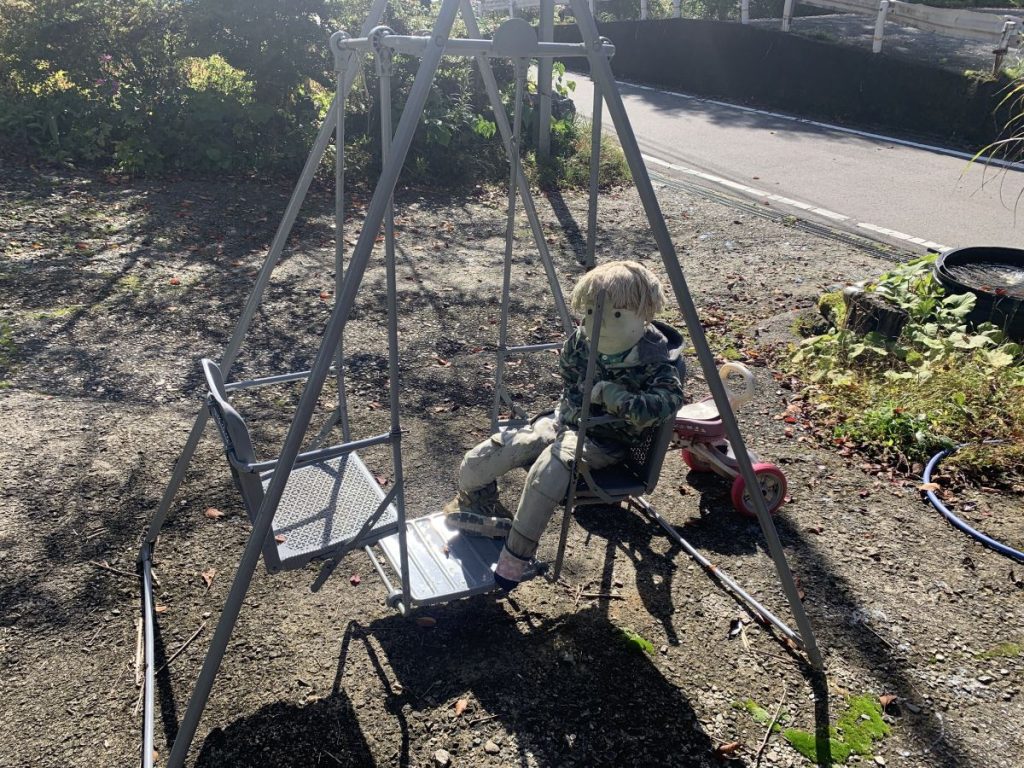
Scattered with small old houses with rusty tin roofs, it’s home to around 30 people and 350 scarecrows. You find them in fields as you’d expect, but also sitting at the bus stop, swinging on the swings in the deserted playground, and just chewing the fat by the side of the road.
This is all thanks to one woman, Scarecrow Momma – Ayono Tsukimi. She grew up here and then moved to Osaka, but in 2002, she returned to Nagaro to care for her father.

When she returned, the town wasn’t as she remembered. Most of the young people had moved away to find work, and the remaining population was aging.
Her first scarecrow was made for the normal practical use – scaring off birds in the family’s vegetable patch, but, as a keen crafter, Ayono-san made the scarecrow to look like her father.
The next one she made as a likeness was of a neighbour who passed away, so she could keep talking to her, and then she just kept going.
Now you’ll find everyone from local residents to famous figures such as ex-Top Gear presenter James May, who visited here for his series, Our Man in Japan.
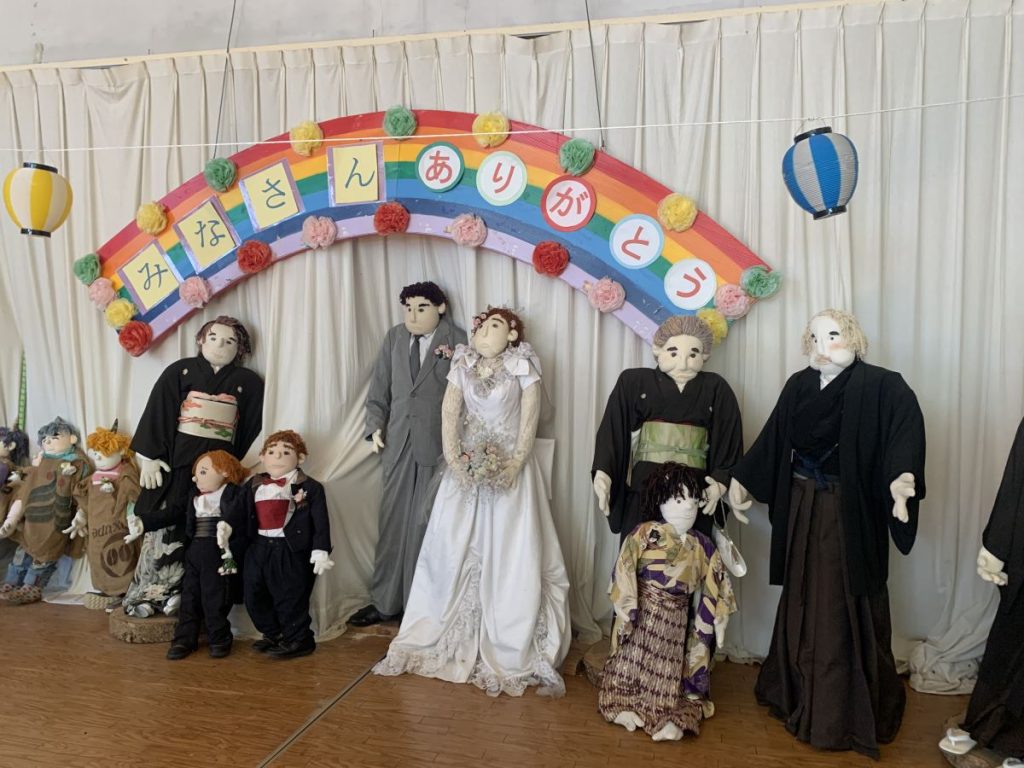
It’s a fantastic place that I’d wanted to visit for a while, but it’s not that easy to get to without a car – and I don’t drive. So, how do you get here?
How We Got to Scarecrow Village
Okay, so we kind of cheated! After a day of perusing bus timetables to try to make things work on a budget, we hired a driver from Kazurabashi Taxi. It wasn’t cheap, but it also meant that we could explore much more of the Iya Valley, as it turns out that this place is full of fun things to see.
You can choose touring courses with Kazurabashi Taxi at a set price, but it didn’t quite cover all the quirky things we’d found to see. So, we chose to pay by the hour and provided them with a list of everything we wanted to see.

It included Scarecrow Village, the Peeing Boy Statue, two of the famous Vine Bridges, the Yokai Museum, and Yokai Statues in Oboke. The taxi company suggested that this would take about six hours, and the cost was 4,900 yen per hour, totalling almost 30,000 yen for the day for the two of us.
We had based ourselves in Takamatsu (at the Dormy Inn Takamatsu Chuo), so we left there at about 7 am. We took the local train to Oboke Station, arriving just before 9 am. Our car was there waiting – now we had six hours of fun ahead of us.
We’d asked them to go to Nagaro first so we could spend all the time there we needed. If we overran, then we figured we’d drop something else from the list.

It took just over an hour to drive there through a lot of winding roads, but as we pulled up, our taxi driver said the best words we could have hoped to hear. ‘Look – Scarecrow Momma.’
Ayono-san was talking to a friend by the side of the road. One quick U-turn and a quick chat from the taxi driver later, we’re out of the car, being introduced and posing for selfies.
If for no other reason, this was worth the extra money we paid over trying to do this by public transport. We wouldn’t have known that this was the woman behind all these amazing creations – and we definitely wouldn’t have been brave enough to ask for photos.

We then spent the next 40 minutes wandering around town, mouths open.
The scarecrows are all over the place – some of them are cute and fun, others, like the one on the swing here, are a bit sad, there’s a picture of one below peering through the door that I’m kind of scared of.
Stuffed Person Central, however, is located across the town’s bridge in the old school. Here, you’ll find everything from wedding parties to international celebrities, like Mr May, all hanging out in the gym.
You can also visit Ayono-san’s crafting shed, which is fun – and, if you speak Japanese, I think she also offers a scarecrow making workshop, but I haven’t been able to find out anything else about that in English.

Is Scarecrow Village Worth Visiting?
I loved it. It’s absolutely unique – but I must say that it’s also a bit sad to think that the town is slowly disappearing, and at some point, possibly the only ‘people’ left here will be the scarecrows.
There are no shops, no little restaurants or anything to spend your cash – the only real way to support the village is to buy some of the carved items that are left out for sale via an honesty box system.
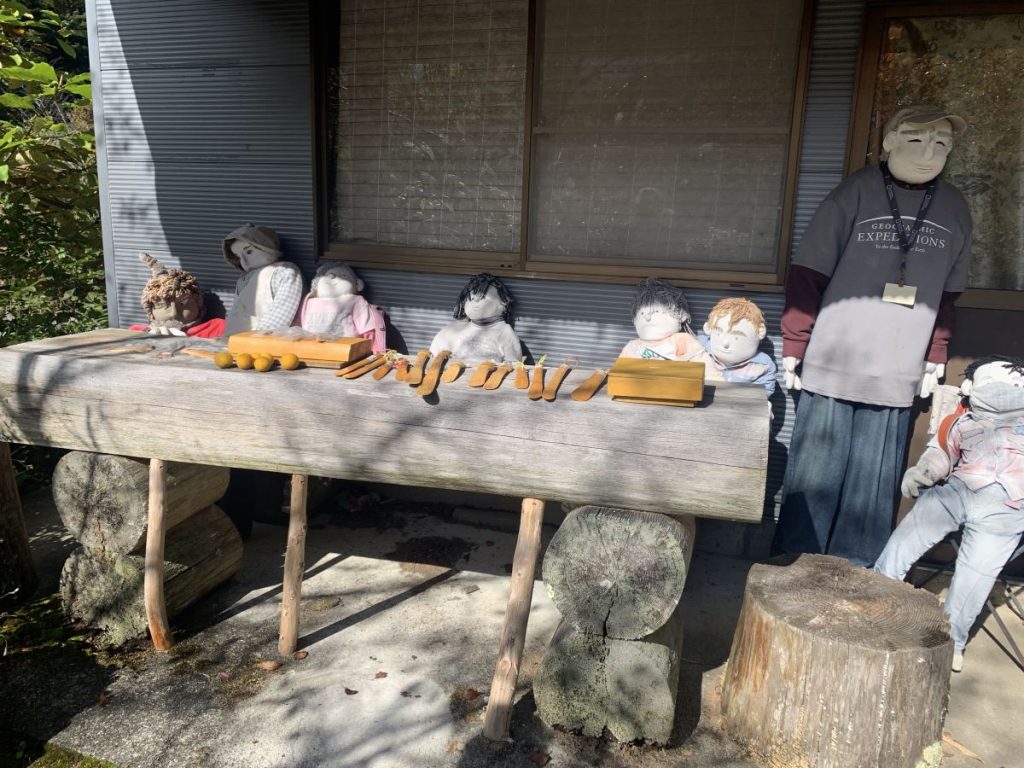
Apparently, only around 3,000 tourists visit the village each year, so I can understand why there’s no infrastructure; however, it would have been nice to spend more money there to help keep things going.
Alternative Ways to Get to Scarecrow Village
Okay, so I know the route we chose wasn’t the cheapest, but it’s not the only way to get here.
Take the Bus
You can also reach Scarecrow Village by public transport, although the timings are infrequent. There is one direct bus in the morning from Oboke Station. Catch this at 10:07 and you will arrive at Scarecrow Village at 10:44. Then, there’s a bus out of the village at 11:38, which will take you to Kubo, where you’ll need to change to another bus to get back to Oboke.
If you’re staying closer to the valley, the bus starts in Miyoshi and also stops at other stations and some popular hotels along the way. Therefore, please check the route if you’re staying elsewhere, as you may find a stop closer to your hotel.

Make sure you check the latest timetables though. The site linked here seems to keep them updated regularly and is in English. However, as it suggests, you might want to check at the local tourist information office to make sure this is the latest version before setting out. Also, look carefully at the buses’ end destination – there are a lot of buses, but they don’t all go to Scarecrow Village.
These buses also stop at some of the other sights we saw, so you might be able to tee up bus times from the more popular stops to stop off at a couple of places. But, ideally, if you do want to see all the other sights in the valley, you’ll need to stay here a couple of days.
I spent about two days trying to find a one-day bus route that wasn’t going to cost us close to AU$300, but then gave up and decided that this was a bucket list experience and to just pay for it. Six months later, I still have zero regrets.
Hire a Car
This is the typical way most Japanese tourists travel around the Valley. Just be aware that the roads are quite small with a lot of bends – it also gets icy up here. If you are looking to hire a car, though, companies like Booking.com can find them in nearby big towns like Takamatsu.
Where to Stay Nearby
We based ourselves in Takamatsu, as we were also visiting the Yokai Art Museum on Shidoshima and the ferries left from there. There are numerous hotels in Takamatsu, and the prices are reasonable. Find a good selection on Priceline – or one of the other booking engines.
However, if you want to stay in the Valley itself, here are some other good options.
4S Stay Awa Ikeda Ekimae
This simple Japanese-style lodging is in the town of Miyoshi, which is perfect if you want to base yourself somewhere with good amenities, but that also has excellent transport links into the valley. Aka Ikeda Station is where the morning bus to Nagaro starts from, so it also makes that part of the journey easy.
Rates are a bargain, but note that you do share a bathroom with the other rooms. Check rooms and rates here.
Hotel Iya Onsen
Located in the middle of the valley, close to the Peeing Boy statue, this luxurious onsen is the perfect place to relax – but also, handily, happens to be on the bus route to Scarecrow Village. Check rooms and rates here.
Hotel Kazurabashi
The onsen in this hotel looks like something out of a fairy tale. Pick from Western-style rooms with traditional beds or one of the tatami mat rooms with futons – some of these have absolutely gorgeous private outdoor onsens. Meals are served on the premises. Again, this is on the bus route to the village. Check rooms and rates here.
Where’s That Scary Scarecrow You Were Talking About?
Here…. it still gives me nightmares

What Else Did We See
As I said, one reason we decided to take a taxi to the village was that it allowed us to see some other quirky sights we had found nearby that we definitely couldn’t have visited without more time and organisation. So, here’s where we went…
Oku Iya Double Vine Bridge and Kazurabashi Vine Bridge
The vine bridges are probably Iya Valley’s most popular sights. They span the many rivers in the region and are literally made up of twisted vines.
This means they are not something you want to do if you are scared of heights – and, if you’ve read some other posts on this site, you’ll know I am not a fan!
I therefore stood on the edge, taking pictures of my brave volunteer as she skipped across them, singing the Indiana Jones theme tune.
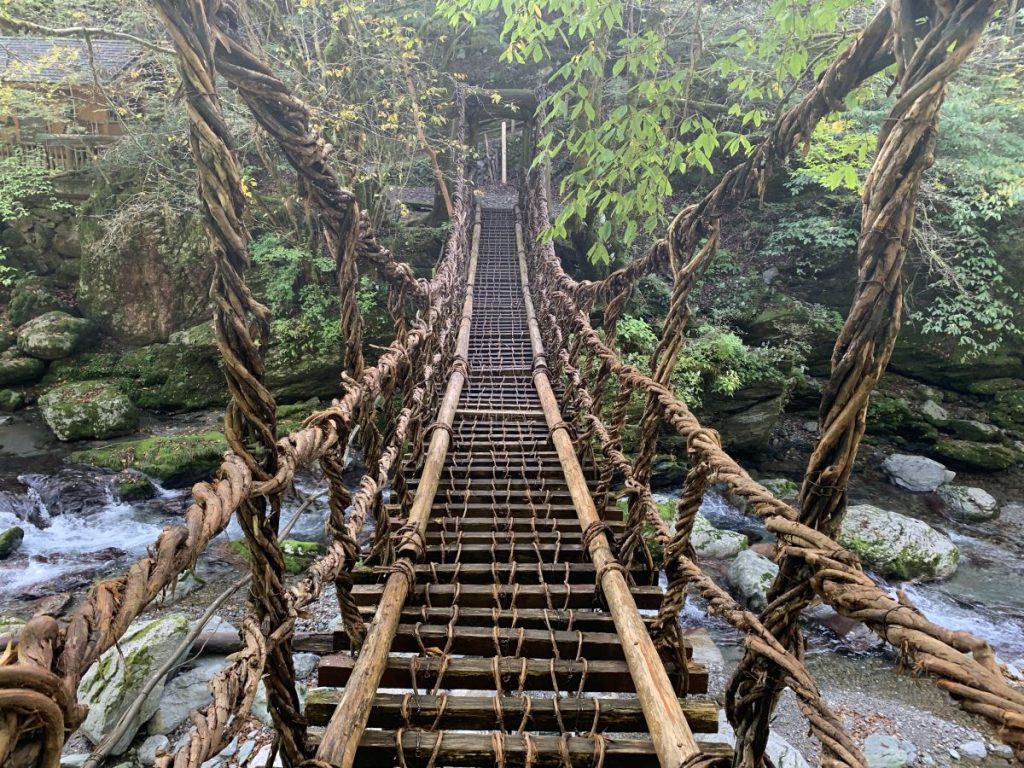
We actually think our plan to visit Nagaro first also helped us beat the crowds here.
Oku-Iya Double Vine Bridge is deep in the valley, and when we arrived at 11 am, we were the only people there, as most people hadn’t made their way through the other sights yet. The story was somewhat different at Kazurabashi, which we arrived at around noon. There were a lot more people on this bridge.
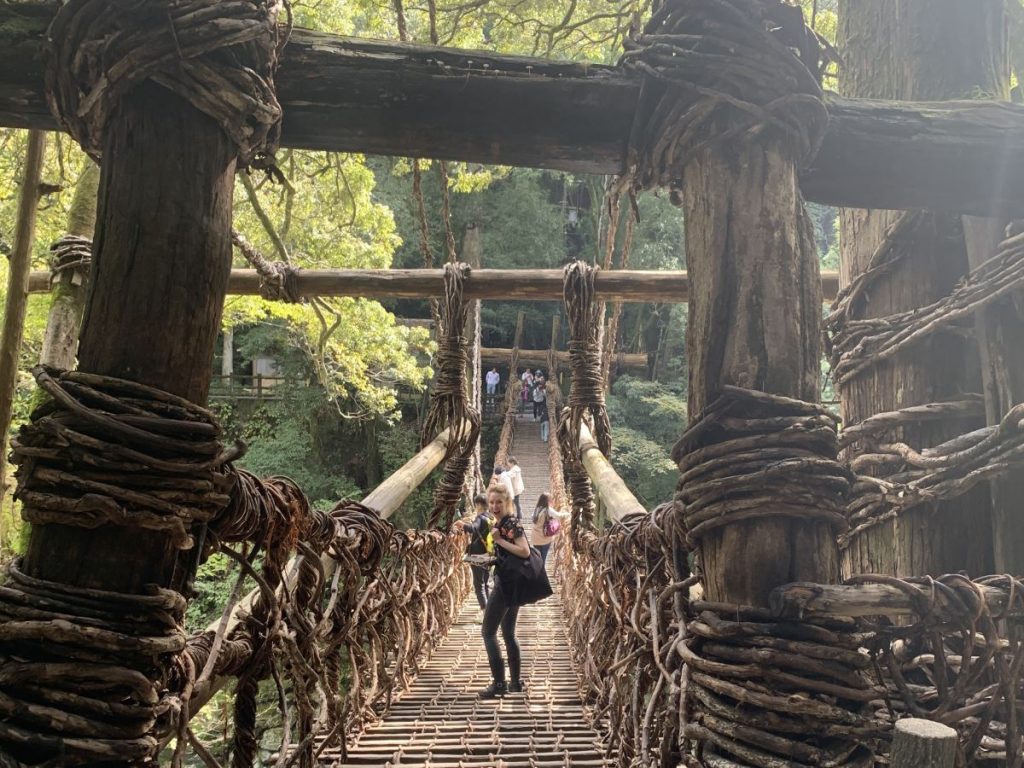
Both bridges have an entry fee of 550 yen for adults and 350 yen for children. At Oku Iya, you pay this at the ticket office on the main road. Kazurabashi has a ticket office near the entrance to the bridge; however, you don’t need to purchase a ticket if you’re not crossing it.
Note, though, Kazurabashi bridge is only one way, so you’ll have to meet your friends out on the main road if, like me, you decide you are not stepping foot on that thing!
Oku Iya closes between December and March. Kazurabashi is open year-round.
The Peeing Tanuki
We hadn’t actually thought about lunch on this trip. We had some snacks and figured they would keep us from getting h-angry, but as we left the Kazurabashi Bridge, our driver asked us if we wanted to get some lunch. When we said yes, he asked us if we liked soba. Yes again – and so he took us to a restaurant.
We had no idea what to expect, but he couldn’t have picked a more fantastic spot for us.
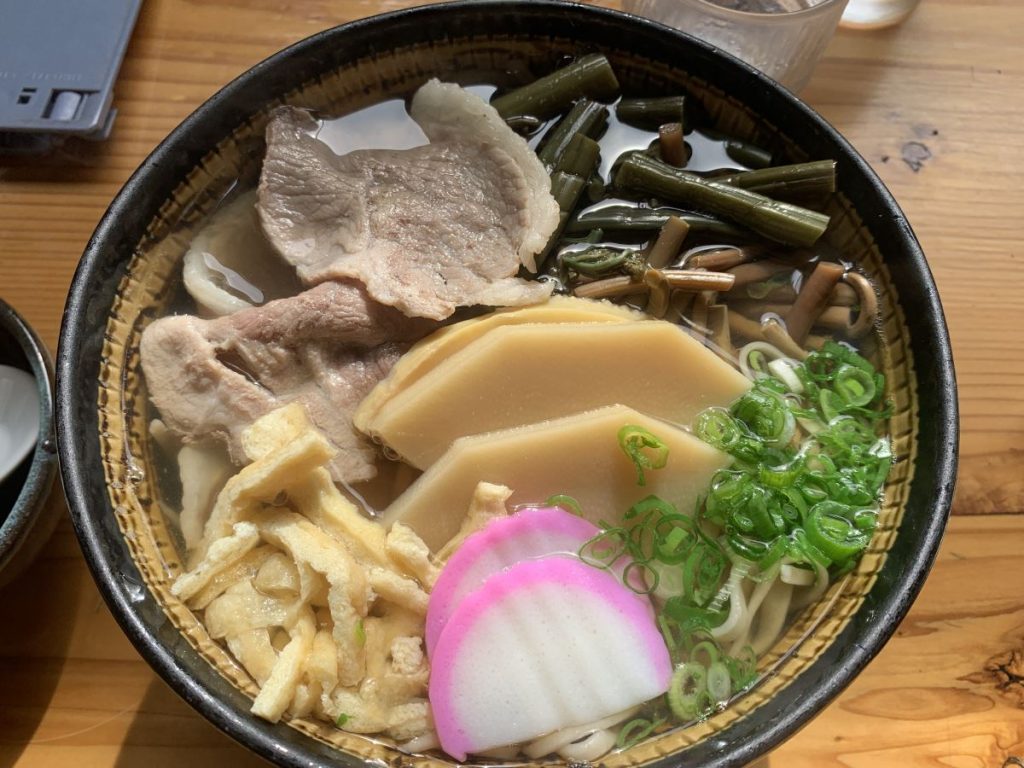
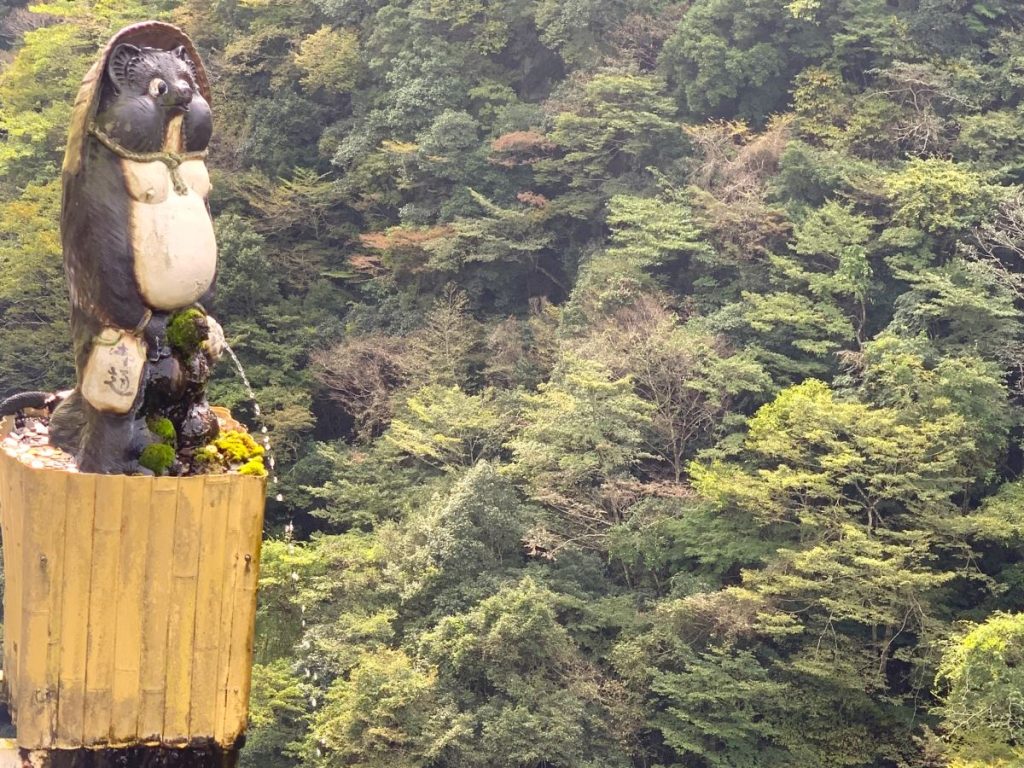
For starters, this place sold wild boar noodles (above), which you don’t find everywhere – but more importantly, as my friend walked over to the edge of the outside seating area to check out the view, she spotted this.
We haven’t got to the Peeing Boy Statue in our guide yet – but this place has a Peeing Tanuki! We were overjoyed!
The restaurant name is 清流のそば処 祖谷美人 – if that’s too hard to type, look for the Iya Bijin hotel on Google maps as it’s right next door. Lunch cost us 1700 yen for the wild boar noodles and 900 yen for a standard soba dish. We also tried one of the sticks of grilled tofu and konjac, which was 500 yen.
We offered to buy our driver lunch, but he had a bento, and so he waited outside with the other drivers until we were done.
Hinoji Valley Bend
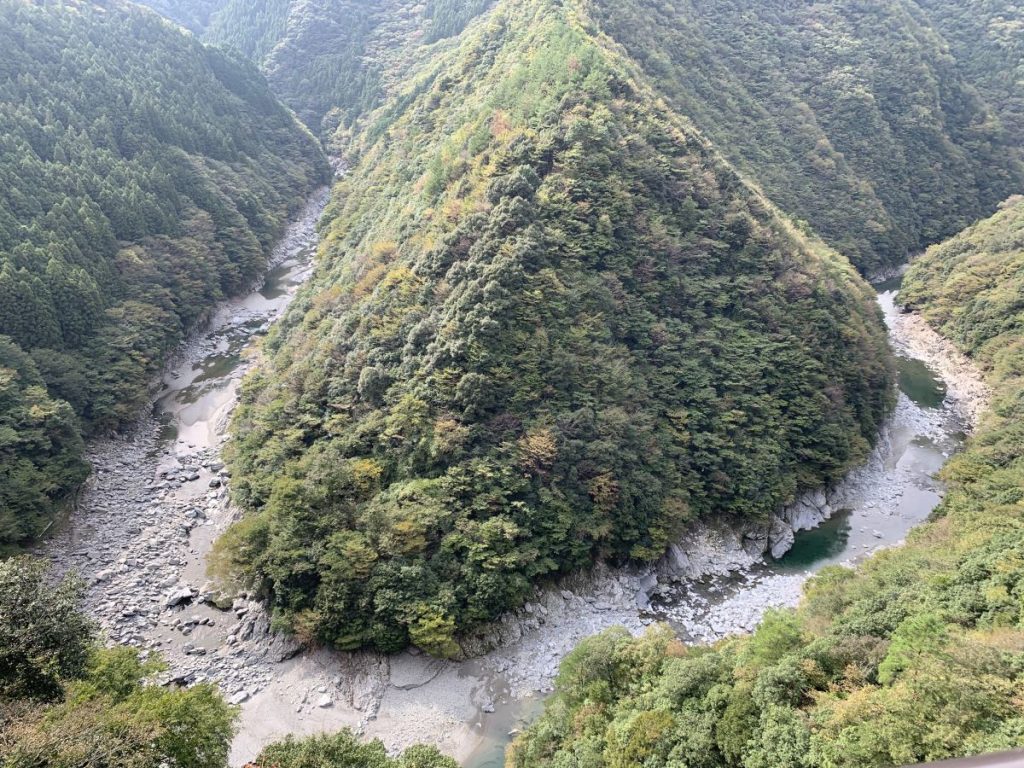
This was the proper tourist bit of our visit – this bend in the river is one of the Iya Valley’s most scenic overlooks. The day we went, the river was a little low, but I’ve seen it look the most beautiful blue. Even with low water, it’s still very pretty.
The Peeing Boy Statue
I often say the reason I love Japan is that someone once said ‘let’s put a giant roaring Godzilla on top of a building’ and someone else said yes – this is the Iya Valley version. Tucked away on the side of a very switchbacky road is the Peeing Boy statue.
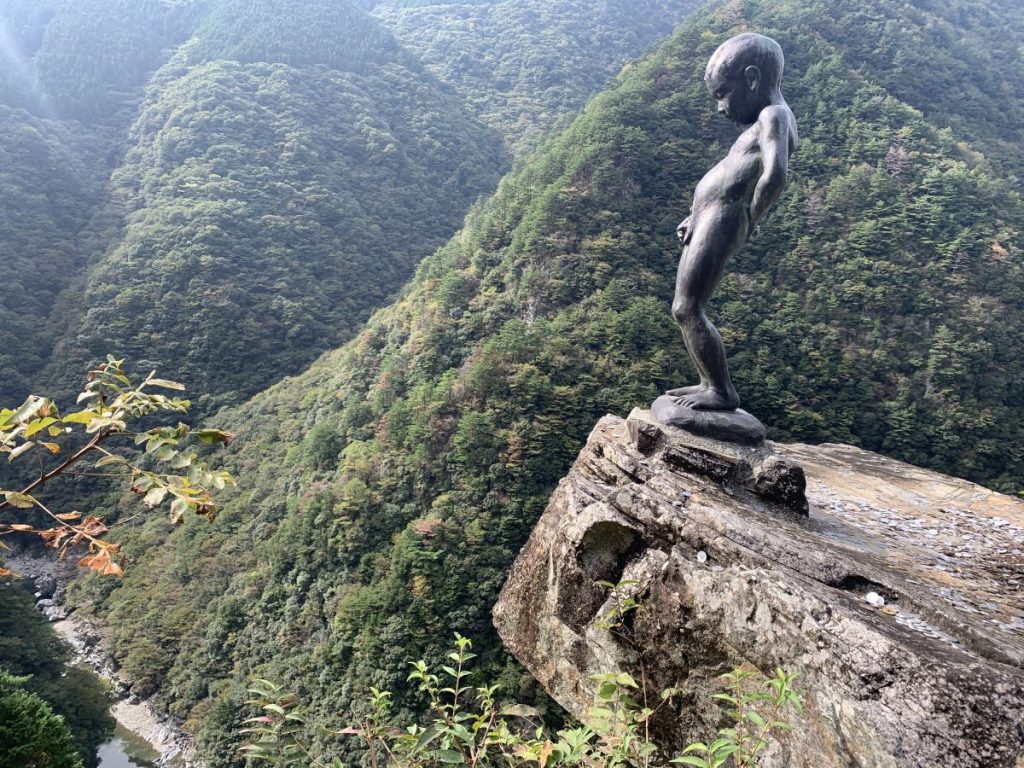
According to Shikoku tourism, the statue is a sign of innocent courage, which probably creates more questions than it answers. But a deeper dive reveals that way back when, the local youth of Iya Valley used to stand on the edge of this rock and do just as the statue does for real – partly for fun and partly to show how brave they were. I think this makes me love it even more.
‘Hey George, the local kids keep peeing off the rock…let’s build a statue in their honour’. Genius!
Yokai Yoshiki Museum
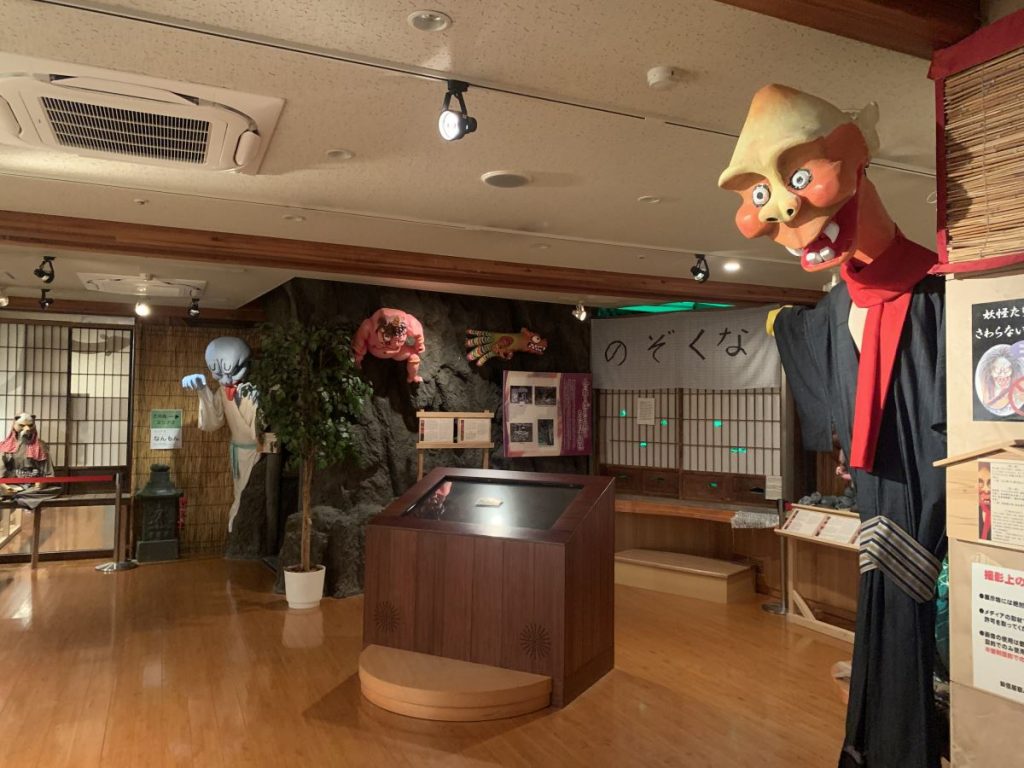
This trip had a theme – we were on a mission to find Japan’s yokai sights. Yokai are the legendary monsters of Japan, and there are a lot of them, and many sights dedicated to them – but I certainly wasn’t expecting to find a major one in Oboke.
The Yokai Yoshiki museum, located a little north of the station, has displays of all the local yokai and explanations of the stories associated with them, and it’s a fun spot to spend 20 or so minutes – and the view over the river from here isn’t bad either. If we were here longer a boat trip along the river to see the gorge would definitely been part of our plans.
Oboke Yokai Statues
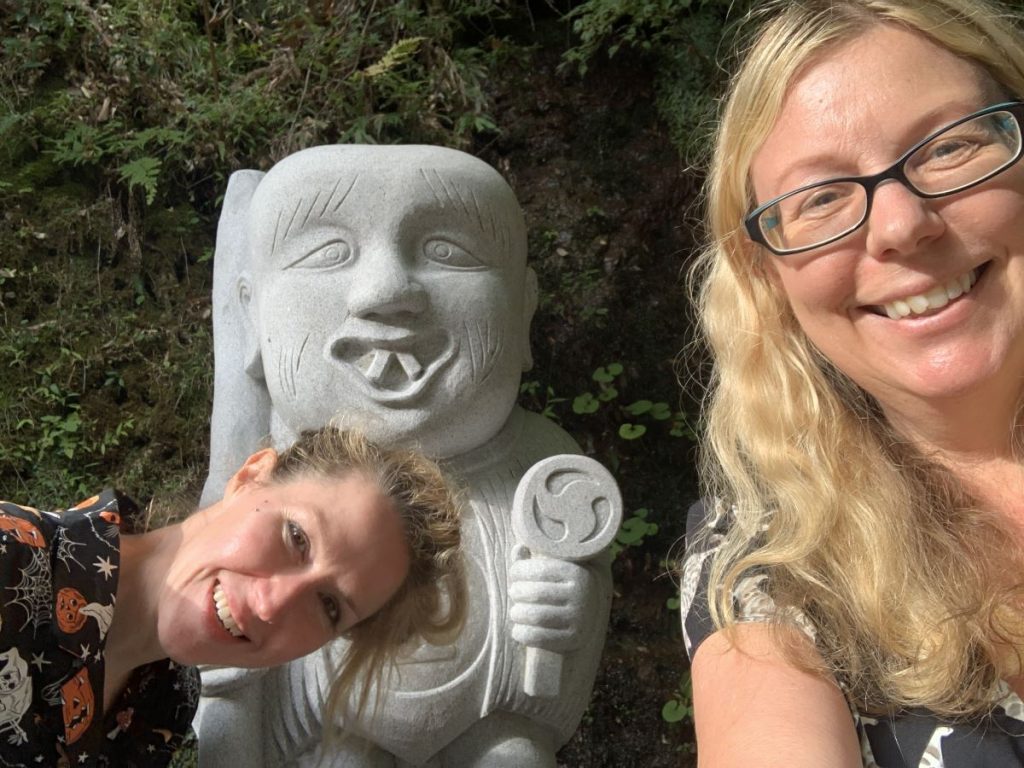
The last stop on our trip was a drive down the road of yokai statues, slightly north of Oboke. There are at least five of these, but we only managed to stop at one of them, as it’s quite a busy road, and we were running a bit tight on time to get back to the station.
If you stop, make sure you translate the signs by each monster as they tell you about the legend behind it. A lot of the Iya Valley monsters were created to stop children from doing things like playing near rivers or wandering too far into the forest (or, peeing off a rock with a 50-foot drop, maybe!).
We arrived back at the station at 2.50 pm, just in time to get the 3 pm train back to Okayama as we were heading to our next stop, the pretty canal-side town of Kurashiki (which has a few fun sights of its own). But there was one final picture to take, the Love Love Bench.
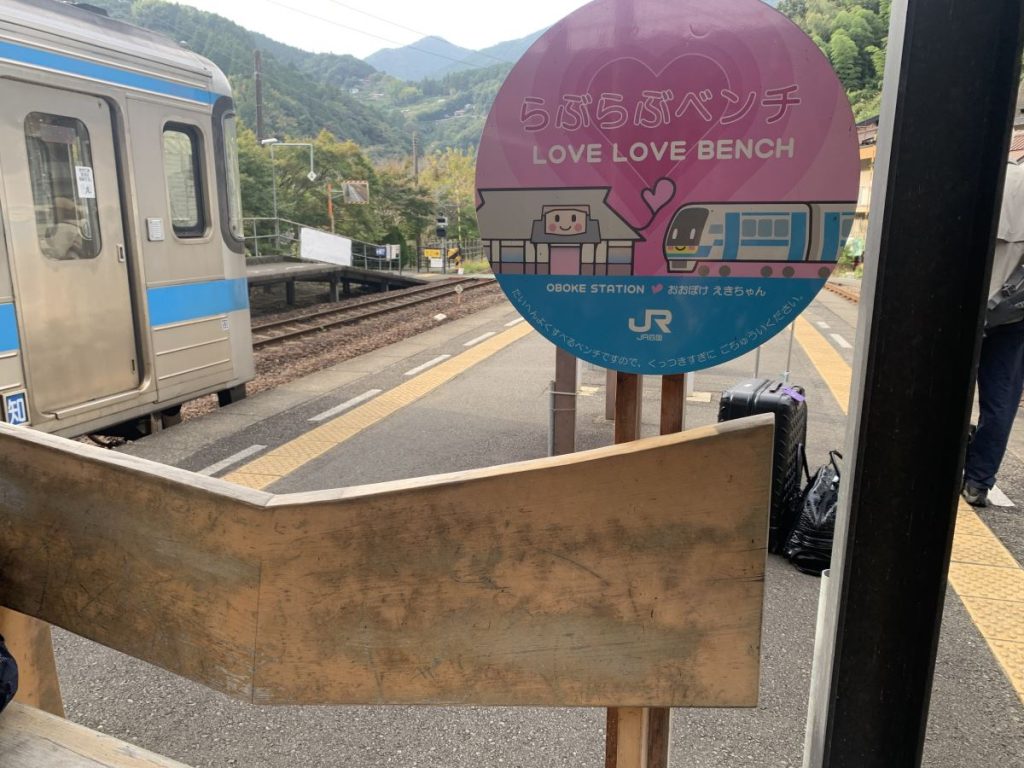
Now this is a terrible picture of the Love Love Bench as it does not show the entire point of this seat, which is that it slants in the middle so that two people sitting on it basically slide together. There are a couple of these around Shikoku, so keep an eye out for them – even though you don’t really know what they look like!
And that was it, our day visiting Scarecrow Village and finding the fun things to do in the Iya Valley was over. It’s an absolutely beautiful part of Japan and I’d love to come back and see more of it and the rest of Shikoku – watch this space!
Final Notes re Hiring a Taxi
If you do like the idea of booking the car, here are the facts. We used Kazurabashi Taxi and firmly recommend them. The team in the planning department speak excellent English and answered our emails quickly.
On the day, our driver was waiting for us. We had suitcases, and while there were lockers we could have used at Oboke Station, the car was big enough to put them in the back, so we did that. Our driver didn’t really speak much English, but he was friendly, and between his bits of English and our bad Japanese, it was all good. And we’ll always be thankful for him spotting Scarecrow Momma! You can book a tour guide to come with you in the taxi, but we quite liked not having to talk to anyone.
You could also arrange for them to pick you up and drop you off at hotels in the region.
To clarify, this is not an advertisement. The taxi company didn’t host me; we paid for it all ourselves, but the service was great, so I’m happy to sing their praises.