Yamato Koriyama is an easy 20-minute train ride from Nara. The town is famous for cultivating goldfish – and they’re leaning into their reputation with all sorts of goldfish-themed sights to spot around the town. Here’s what to keep an eye out for…
The Station
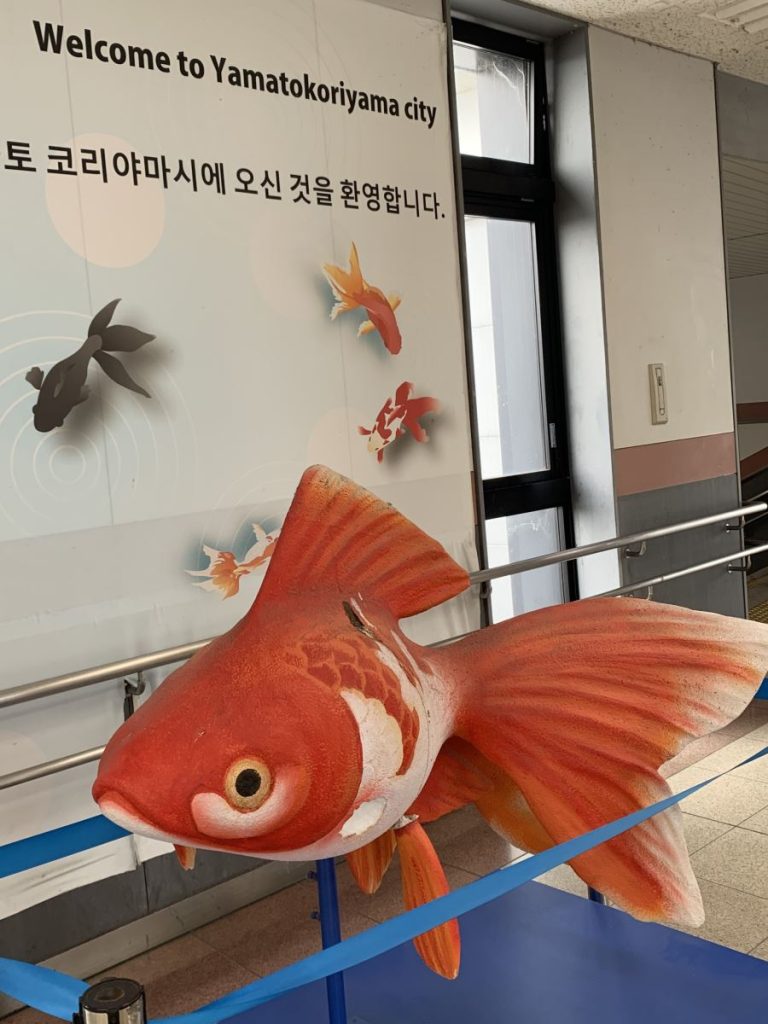
I started my walk around Yamato Koriyama from the JR Koriyama station, and immediately knew I was in the right place, as this fella was just outside the ticket barrier.
Posts on this site may contain affiliate links, and I get a small commission if you purchase from these. As an Amazon Associate, I earn from qualifying purchases.
It’s said that fish were first cultivated in Yamato Koriyama at the end of the Edo period by a samurai called Sato Sanzaemon. They are now one of the coveted types of fish kept in Japan.
There are still fish farms on the outskirts of the town, but my interest lay in the town itself, and all the fun fish-themed touches within it.
I didn’t really have a plan for exploring Yamato Koriyama, I just figured I’d walk around and see what I could find. And here’s how it went…
Homemade Fish
I turned left as I left the station, then took the second right onto a road handily marked on the map as the easy-to-read Route 144.
While this might sound like a major route, it’s actually a pretty quiet one-way road lined with a mix of small shrines, local shops and residential houses – but this doesn’t mean that they forget the fish.
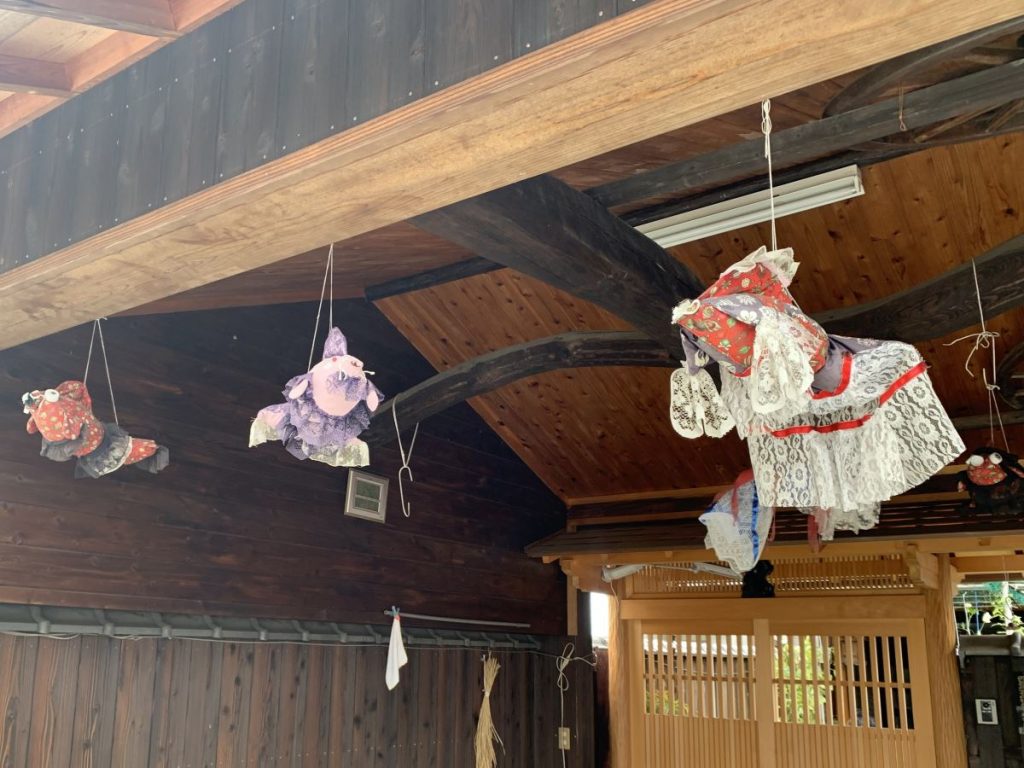
Stuffed handmade fish were hanging from one person’s garage.
Who Knew Goldfish Scooping Was a Sport?
A bit further down the road, there were posters advertising various community events – including the World Goldfish Scooping Championship. Who knew this was even a thing?
But, apparently, it happens once a year in the fantastically named Goldfish Square in the town. They usually have well over 1000 competitors, including a few from outside of Japan.
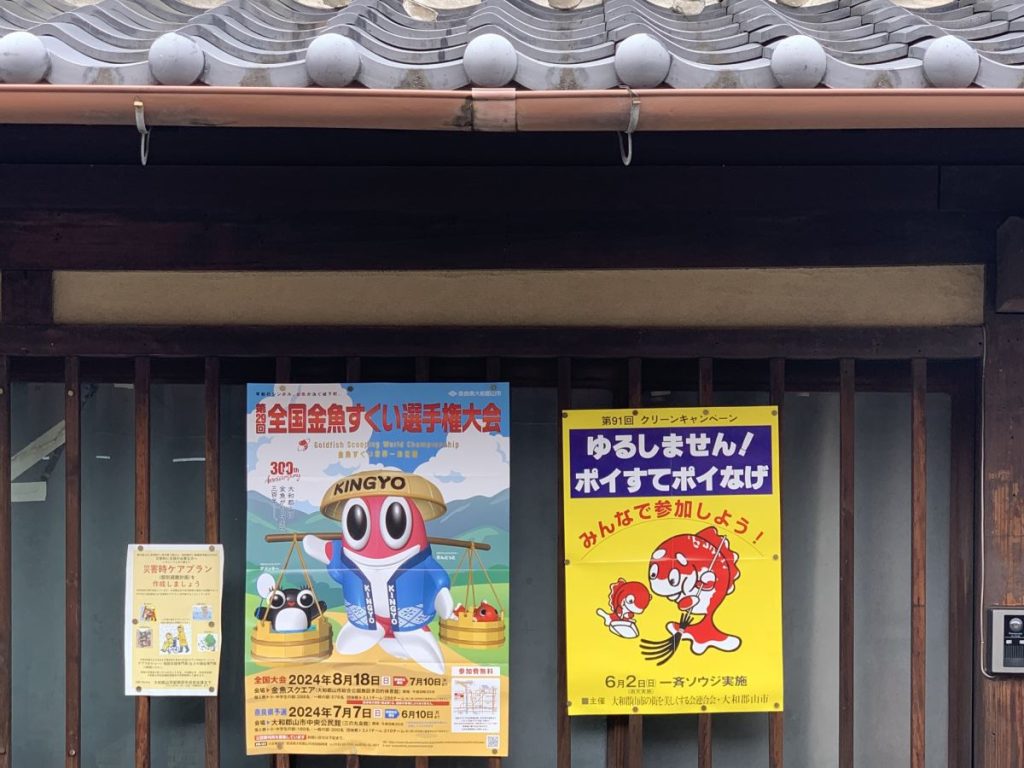
While Japanese competitors have to qualify for the big event, foreigners are currently welcome to attend without pre-trials, and the rules are now posted in English.
The deal is basically to see how many goldfish you can scoop up in three minutes- but that’s not as easy as it sounds, as the scooper is made of washi paper, and fish live in water, basically, move too slowly and you won’t catch anything, but if you move too fast, the paper disintegrates!
People around town actually train for the event – and the winner scooped 70 fish.
The yellow poster is a community cleaning event to keep the town looking pretty – lots of the local signs in Yamato Koriyama include fish motifs.
Visit the Shrines and Temples
While I was mostly here to spot all things fishy, this road is dotted with small shrines and temples, so it seemed rude not to take some time to wander inside a few.
The complex containing Yakuyokeyakushi Yakuenji drew me in by its red fence and pretty lanterns
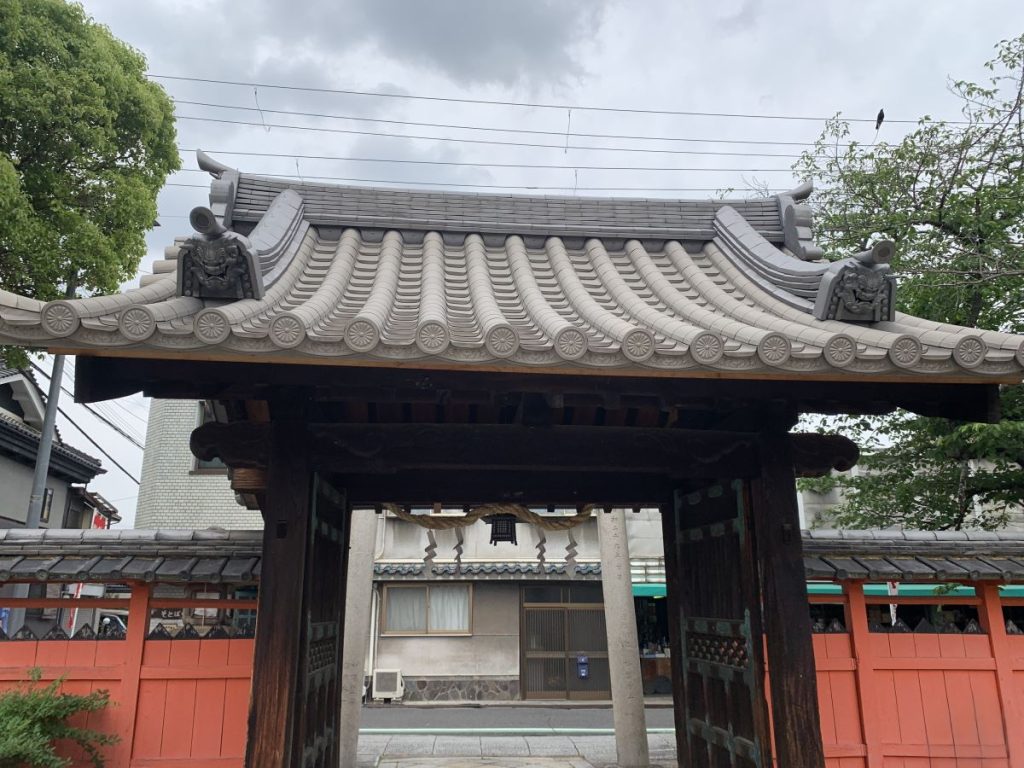
Inside, I found a retro fortune slip machine, cute lucky charms and a treasure lottery – where you can basically lucky dip for one of 25 different lucky charms.
Religious spots in Japan are full of different ways to tell fortunes or bestow luck, but you don’t always notice this at first glance – so, my new rule at any shrine or temple is to translate all the signs.
You’ll find all sorts of quirky touches – at Zenkoji in Nagano, for example, I found a jizo figure designed to reduce anxiety, Daishoin in Miyajima has a statue with a giant ear that’s basically there to listen to people complain.
Goldfish Street
Once you go past Yakuyokeyakushi Yakuenji, cross the next set of traffic lights, and walk another couple of blocks to the next four-way intersection – if you’re not sure if you’re in the right place, there should be a car park on your left and a cool retro watch shop called Tamai on your right.
Turn right down here, and you are walking on what’s known as Goldfish Street.
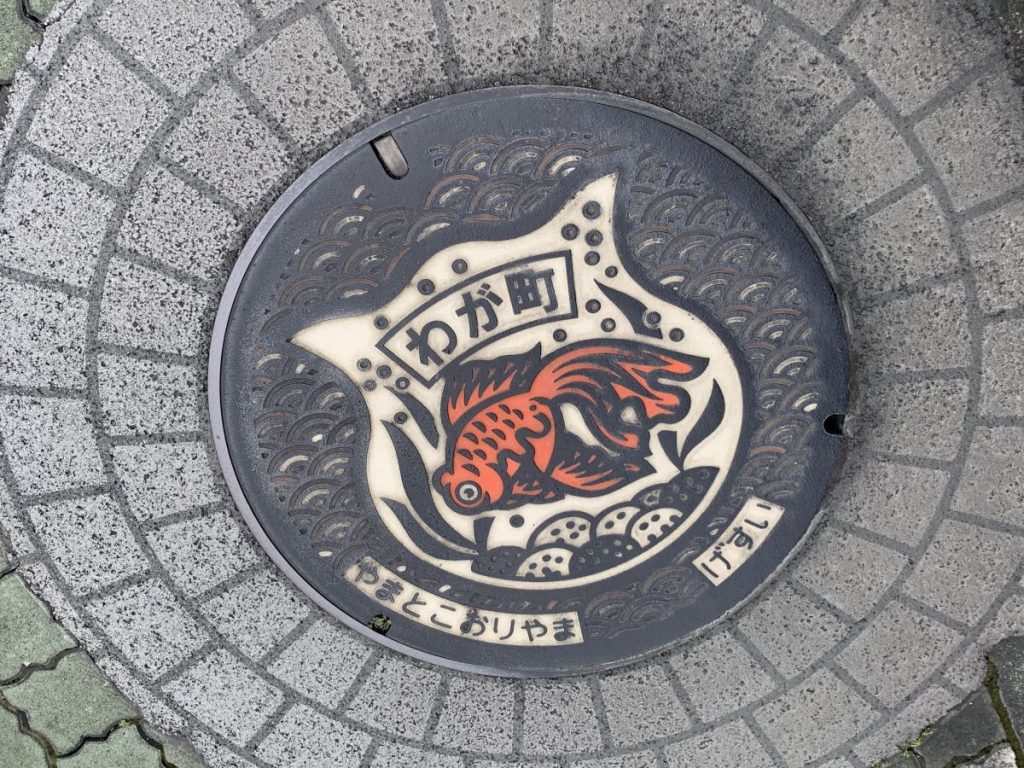
Again, you’ll be walking past lots of local shops – but you’ll start to see goldfish touches appearing – like goldfish manhole covers, aquariums in shop windows or tanks outside the entrances and, in some other unusual spots like…
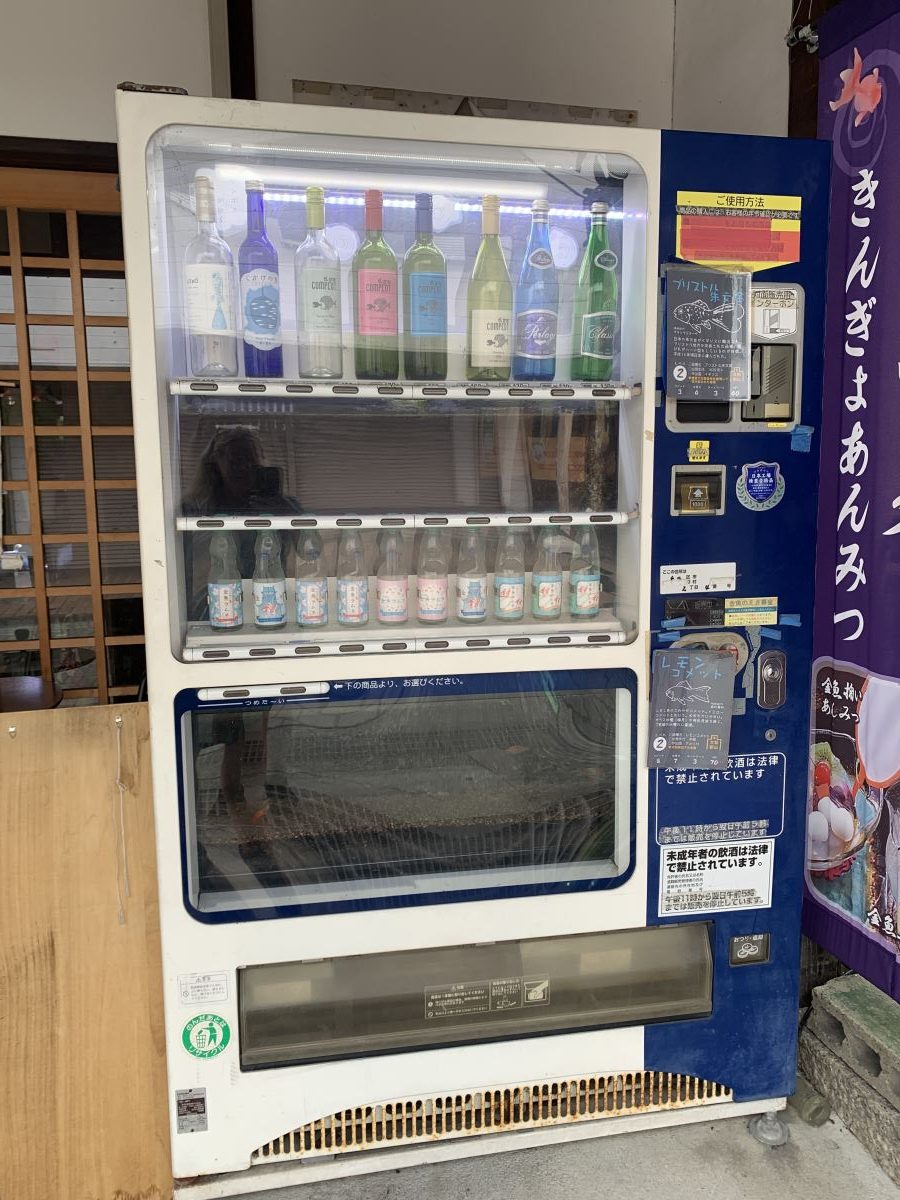
The Sake Vending Machine
Not only is the sight of bottles of alcohol in a machine in the middle of the street interesting, there’s a mini aquarium in the middle of it.
This is outside a restaurant called Kingyo, which also has a fun fish tank inside. They sell main meals, but also shaved ice and Japanese desserts.
They are open from 12 to 4 pm, closed Monday and Tuesday.
The Goldfish Turnstile
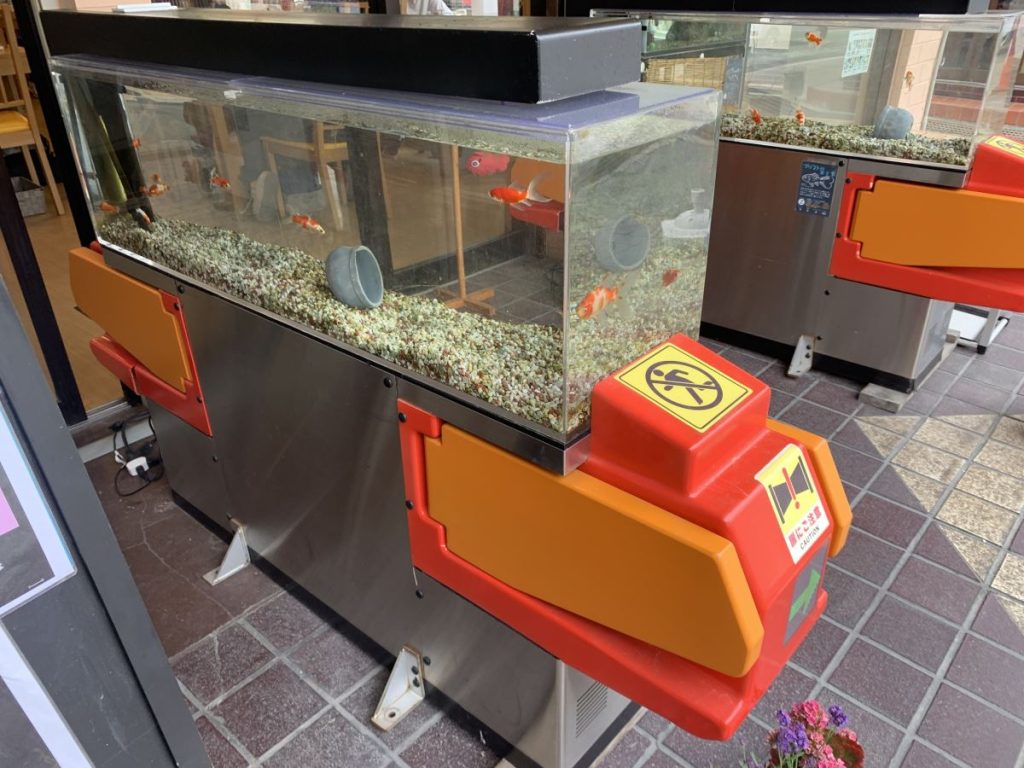
If you need an icon to type into Google Maps to find Goldfish Street, Goldfish Turnstile is it.
It’s actually a set of fish tanks mounted on top of some old ticket barriers that mark the entrance to a cafe, 彩食キッチンBon やなぎ店.
They offer set breakfasts, lunches and have a menu in English.
Order one of their ice creams, and it might come topped with a goldfish-shaped biscuit.
It’s open from 9,45 am to 4 pm – but closed Saturday and Sunday.
If you’re craving veggies (which can be common after a week or so in Japan), you might want to stop at にこカフェ, which offers bowls topped with avocado, tomato, corn, grated carrots and more. They are open from 9 am to 5 pm, closed on Monday and Tuesday.
The Fish Canal
At the next four-way intersection, you’re going to turn right – but before you do, have a look and see if the wooden lantern-shaped fish tank is outside the bank of Kyoto – this has a little wicker screen that they can pull down to protect the fish if it’s too sunny.
The main reason I turned right down this road was that it has a small canal running down the middle of it, and on Google Maps, it’s marked – Goldfish.
At this point, I thought it might be like the town of Hida Furukawa, where goldfish swim alongside the street, but sadly not.
Apparently, this used to happen many years ago, but not today.
The canals were built as a way to deliver water to the indigo dye shops that used to line this street.
Try Goldfish Scooping
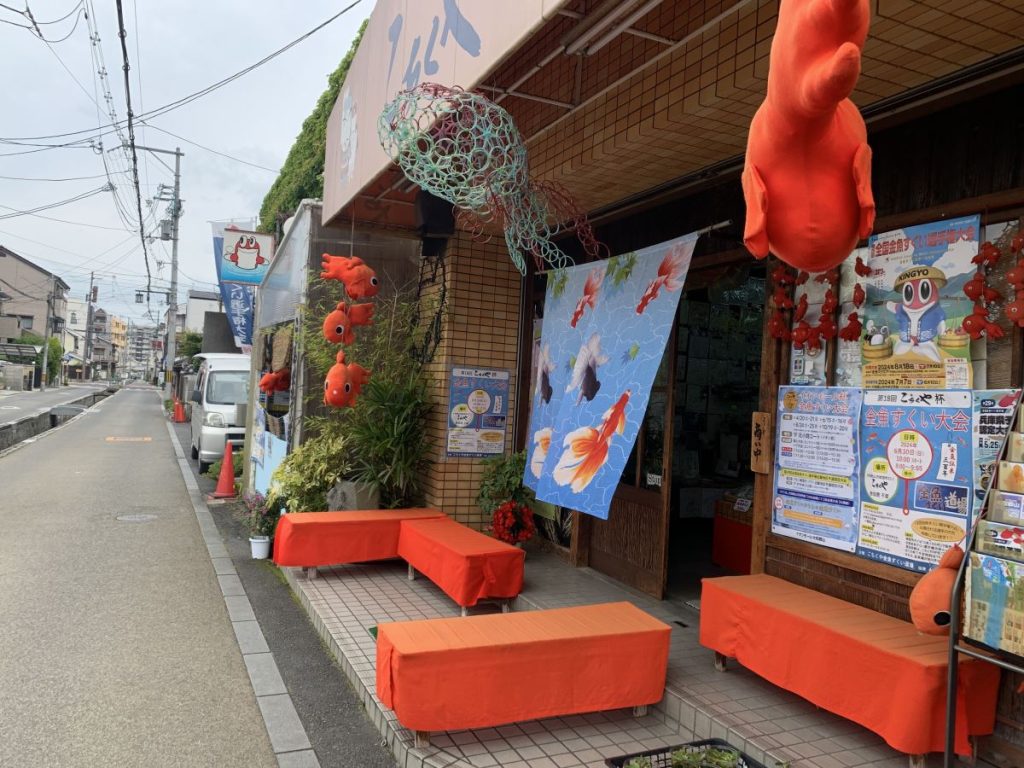
The main point of interest here for fish fanciers is a shop called おみやげ処 こちくや.
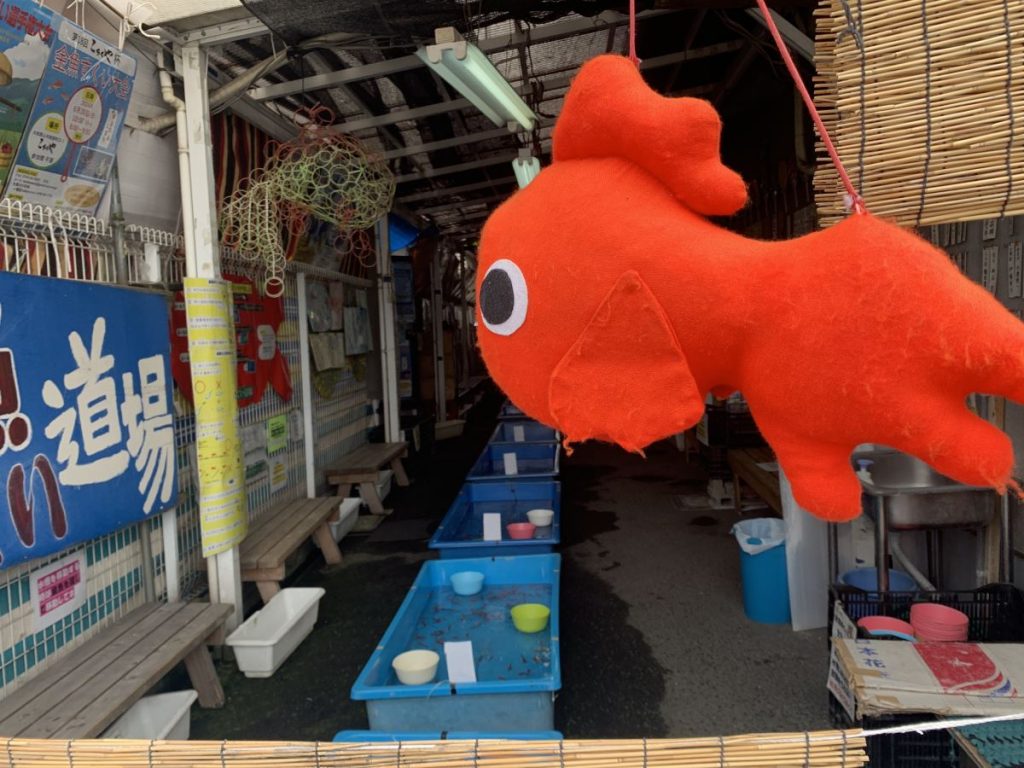
The shop sells heaps of goldfish-themed goodies – and also serves as the main goldfish scooping training spot for the locals! They currently have 415 students studying there.
You can also give it a try yourself here; it costs 150 yen.
The Fish Television
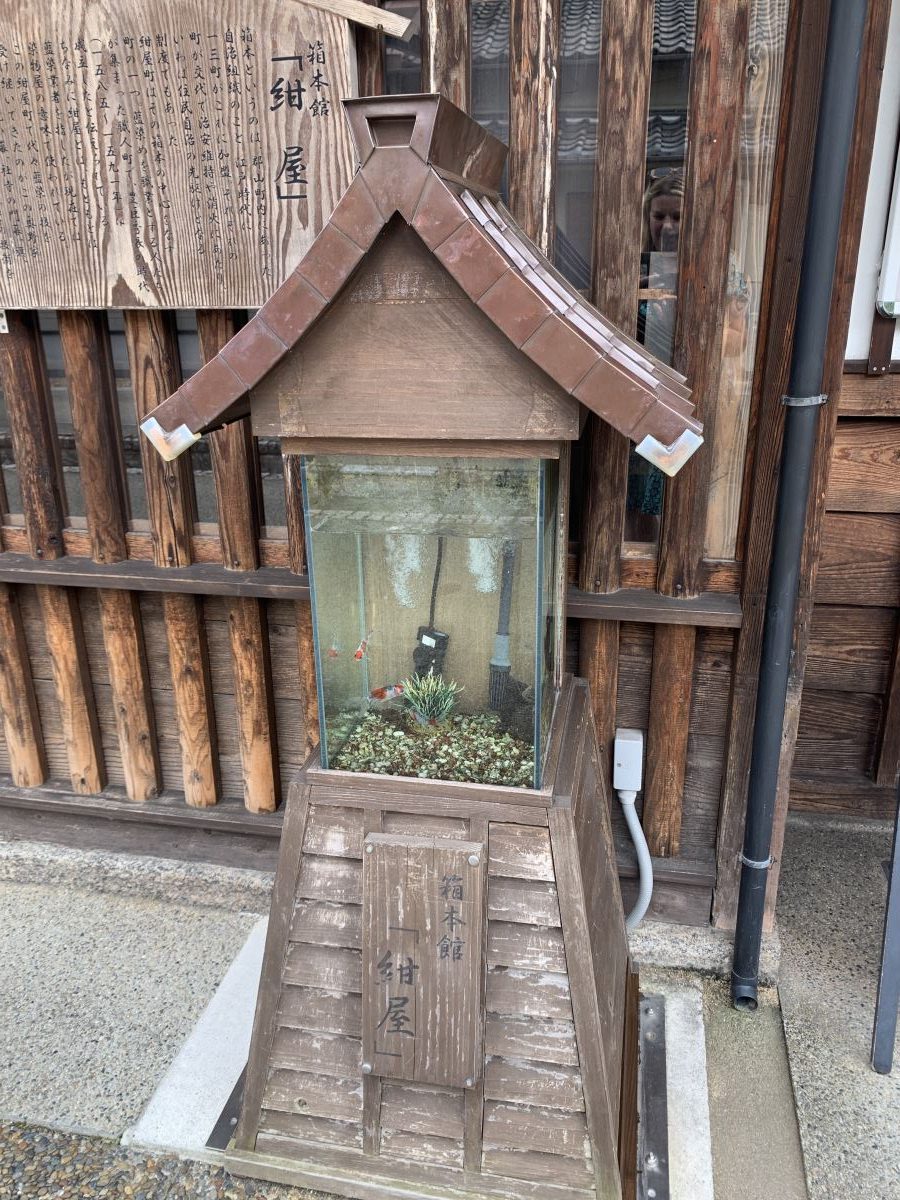
Further down the road is a shop/museum called Hakomotokan “Konya”.
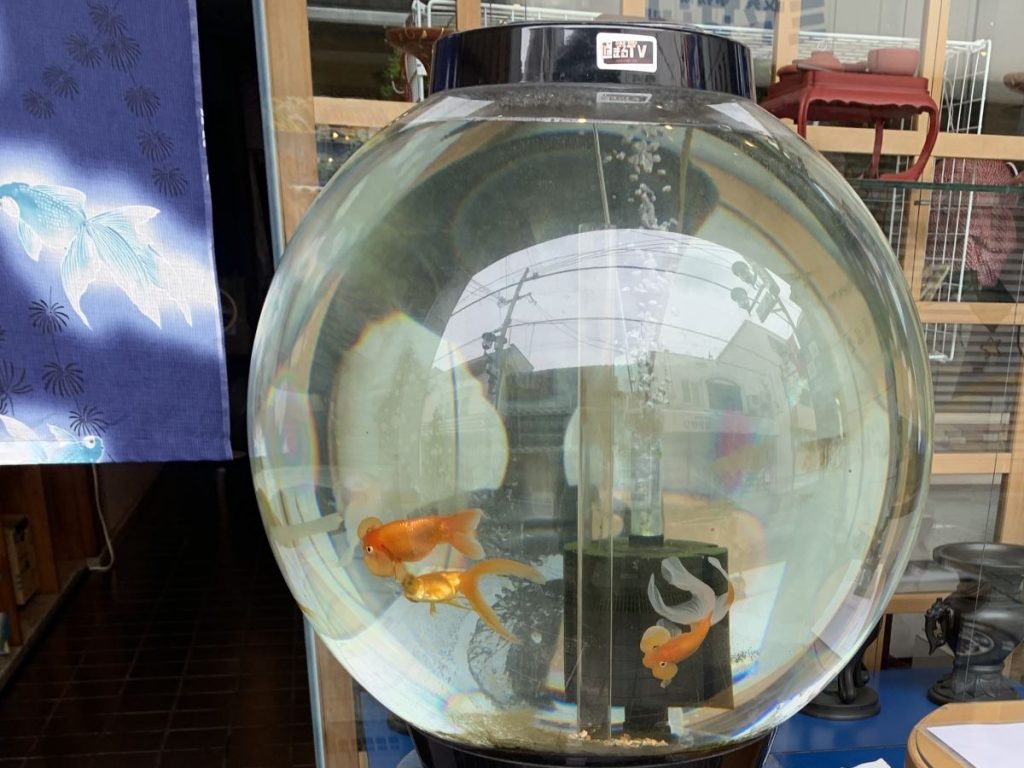
This has a cute lantern fish tank outside – but, inside, they have an aquarium in an old fish tank that I regret not going inside to see.
For some reason, I didn’t realise it was a museum – I thought it was a restaurant so, didn’t think I could go in.
You should though as it’s full of fish-themed decorations and fish tanks. They also have a small museum here explaining more about the indigo dyeing industry in the town. You can even book in and make your own dyed handkerchief.
They are open from 9 am to 5 pm six days a week. They close on a Monday.
At this point, I decided to head back to the station – I’d already spent the morning wandering around Uji and I needed to give my feet a break, but I could have kept wandering around the town, as there are plenty more small shrines to explore, plus the ruins of the old castle.
If you have any aspiring baseball players with you, the Koriyama Hachiman Shrine south of the town is a must-see as it has developed a reputation as a place for players to pray – and there’s even a glove shrine here.
While you are here, pop into K Coffee, a coffee shop in an old garage. Speaking of which…
Where is the Goldfish Telephone Booth in Koriyama?
This used to be Koriyama’s most famous goldfish exhibit.
It was a giant aquarium in an old phone box, and located by K Coffee.
However, it was removed in 2021 after the artist of a famous artwork that used the same idea first made a copyright claim against it.
It does still appear on social media reels now and again, but if you’re coming here searching for it, you’re going to be sadly disappointed.
Want to Learn More About this Fun Town?
You can book a two-hour walking tour of Koriyama that will explain all the history of the town – and the goldfish industry. See more about it here.
How to Get to Yamato Koriyama?
You can easily visit Yamato Koriyama from Nara, Osaka and Kyoto.
There are two stations in Yamato Koriyama.
JR Koriyama Station is served by the JR Yamatoji line. It will take you 4-minutes to get here from JR Nara station. You can also use this line to get here from Osaka Station. It takes 48 minutes to get here.
Kintetsu Koriyama Station is served by the Kintetsu Line. This is the best way to get here from Kyoto – it takes about an hour. Note: While Kintetsu have a station in Nara, this is for a different branch of the line, and you will have to change. You are better off using the route above from Nara.