Zenkoji temple in Nagano is one of Japan’s most important spiritual places, but the grounds and the nearby sub-temples surrounding it are also full of fun and unusual sights. Here are 17 things to look out for.
I admit that I wasn’t hugely interested when I first decided to go to Zenkoji. I thought it would just be another big shrine full of tourists. And, to some extent, I was right. Because it is so important to the Buddhist faith, the main hall is bustling. Go there at lunchtime on a Saturday as I first did, and you might even have to queue to get in. But, if you can juggle your schedule to arrive as it opens, you’ll have a much better experience.

If you haven’t already researched Zenkoji, you might wonder why it’s so special. The answer is that it houses what’s believed to be the first statue of Buddha in Japan. But you can’t see it. No-one can. Not the head priest, not the Emporer of Japan, not even the Dalai Lama got a peek when he visited. The closest you might come is seeing the replica of the statue, which is brought out in public every seven years. At this time, Zenkoji becomes even busier than it is now.
However, after spending a little while at Zenkoji, I realised the main buildings were only part of what’s around here and, I kept noticing small, quirky touches that completely changed my opinion of the place. So, here’s what to look out for.
In the Main Buildings
You can’t take pictures inside the main hall at Zenkoji, so I don’t have pictures of all of these, but they will be pretty obvious once you’re inside.
1. The Lucky Cow
The Visitors Centre for foreign tourists is a great place to stop when arriving at Zenkoji. They can give you maps and other tips in English, and if you want to book a tour in English, you can check availability here – but the centre is also home to this slightly burnished cow.
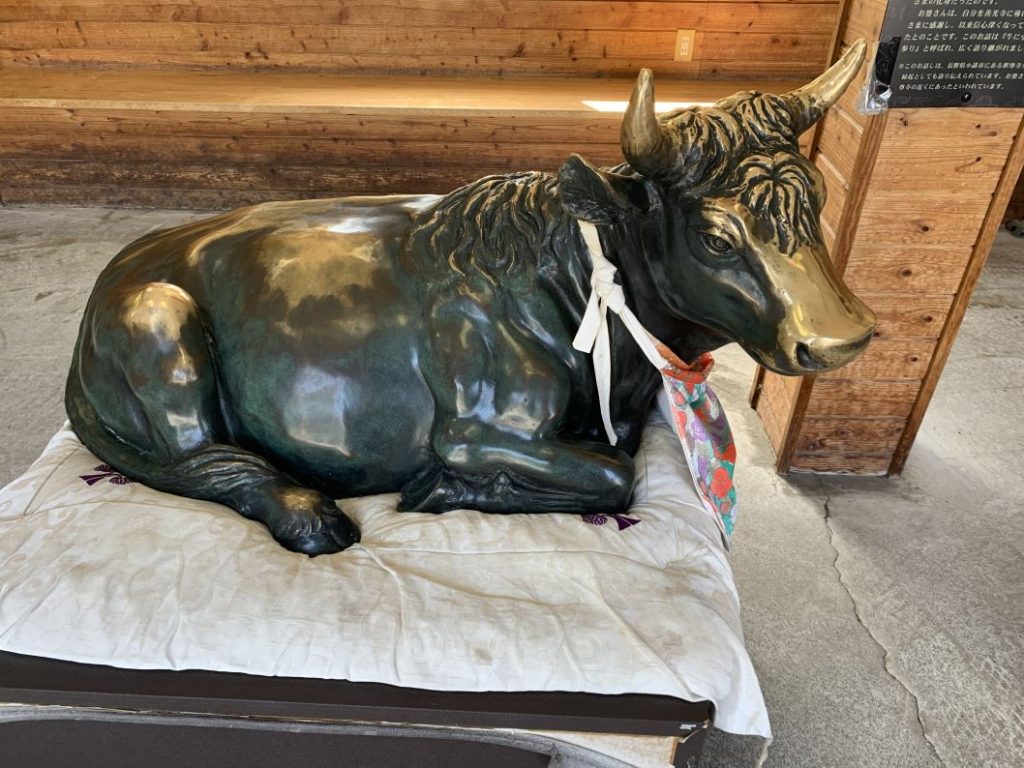
The story on the sign next to it tells of an old lady living near the temple who had never visited it. One day, while she was washing, a cow appeared, snatched a piece of her clothing, and ran off. When she chased the cow, the woman ended up at Zenkoji and followed the cow to the altar.
However, this was no ordinary cow. It was an incarnation of Buddha created to finally lead this woman to her spiritual home. She was so grateful that she became a devout Buddhist and ascended to paradise in the afterlife.
Hence, the cow statue at the front of the temple. People now rub the statue for luck, and the coating has worn away in some places.
2. The Nurebotoko
One of the first things you notice as you walk toward the temple is a line of six jizo statues to your right – and a large jizo sitting alone to one side. This is the Nurebotoko – or wet jizo.
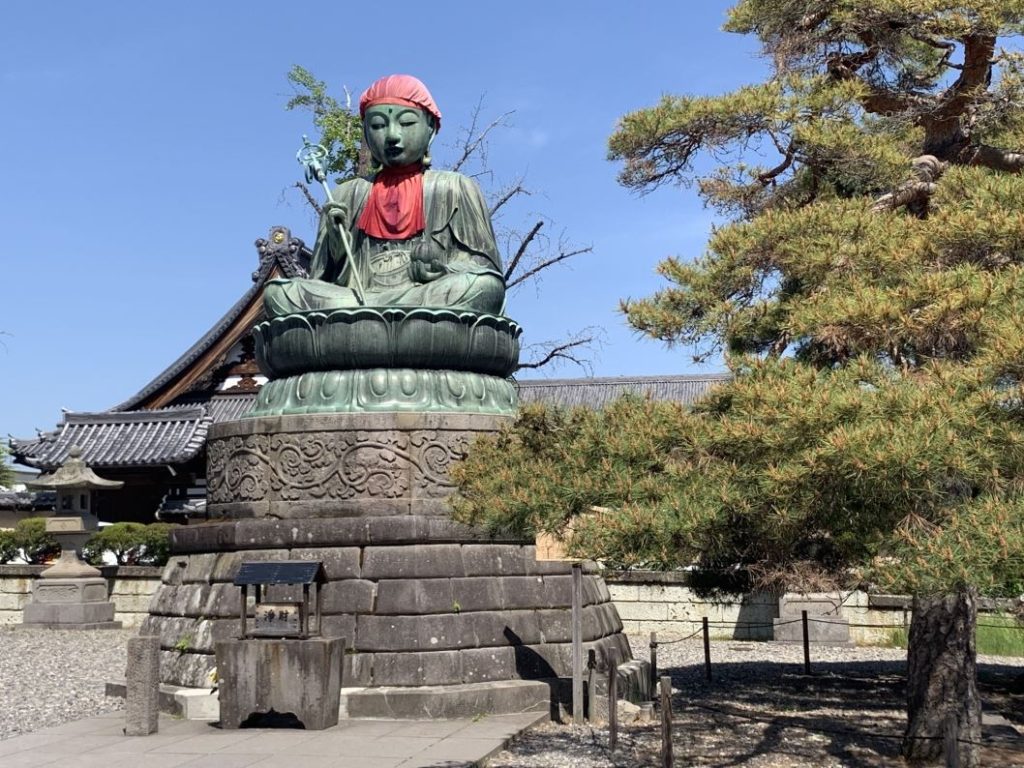
The Main Hall of Zenkoji has burned down more than once, so this large Jizo statue at the temple entrance is now said to help protect the site against fire.
Many people say the statue looks like it’s crying – what do you think?
3. The Revolving Bookcase
The Sutra Building at Zenkoji houses important Buddhist texts, but in the middle is a bookcase called the Rinzo. This revolves, and like spinning a prayer wheel, turning the case once is said to give the same spiritual blessings as reciting the sutra out loud.
4. The Sand Mandala
This sand display in the temple’s history and artefacts museum (in the Pagoda) took 16 Tibetan monks ten days to make. While sand mandalas are typically transient, the Dali Lama consecrated this one in 2010, and it’s on display here for good.
5. Binzuru
This statue of a physician is said to be able to help heal ailments. You are supposed to touch him in the area you wish to help. He’s pretty worn down in places.
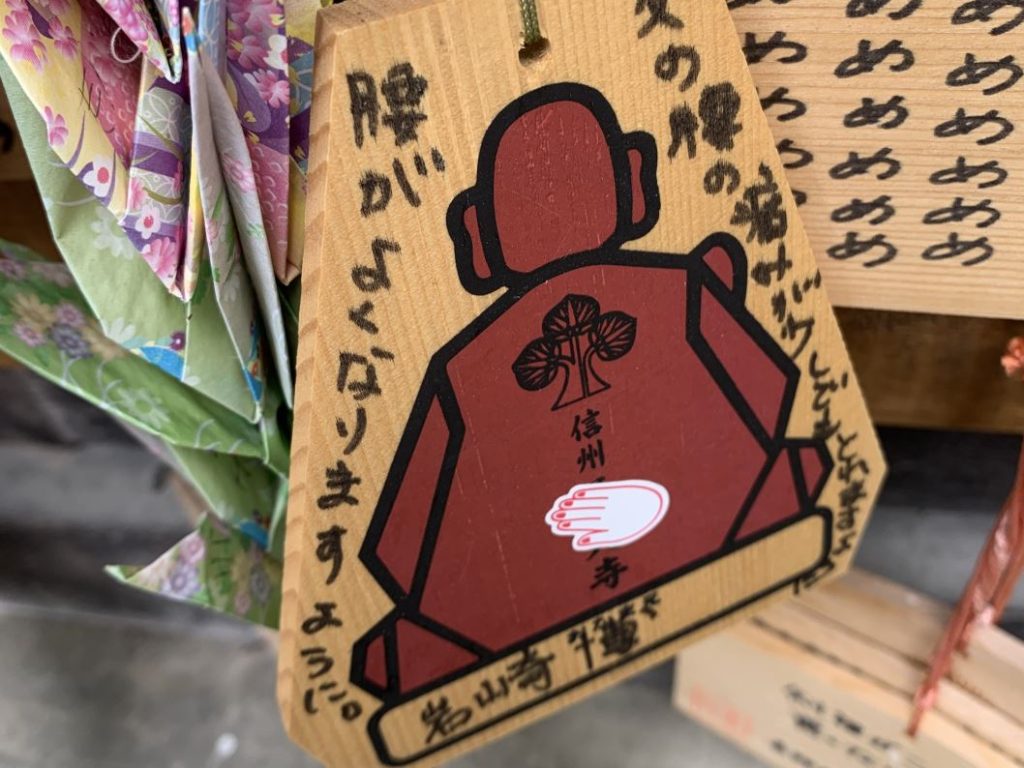
If you can’t reach him for the crowds, there are a couple of other statues with a similar legend outside the main hall. You can also write on a Binzuru ema plaque outside.
6. The Key of Enlightenment
This dark passage runs directly under where the genuine statue of the Buddha is held. It’s said that if you can walk through it, and still find the ‘key’ attached to the wall, you will find your way to paradise.
It’s dark under there and it can get crowded so skip this if you’re claustrophobic.
In the Grounds
The Zenkoji complex is vast – and there is a lot to be found in the grounds surrounding the buildings. I did not allow enough time to do this as I didn’t realise what a treasure trove of weirdness it was until my second day in Nagano. I had to get up really early and whizz around, trying to see as much as I could before I caught a train to see the Frog Street in Matsumoto!
I’m sure I missed a few other things – I’ll add to the list next time I go back. But here are a few to get you started.
7. The Image of Tsumebori-Nyorai
This stone statue was said to have been carved by St Shinran (an important Buddhist monk). But not with tools. It’s said that he carved it using his fingernails over the 100 days he spent in Zenjoki.
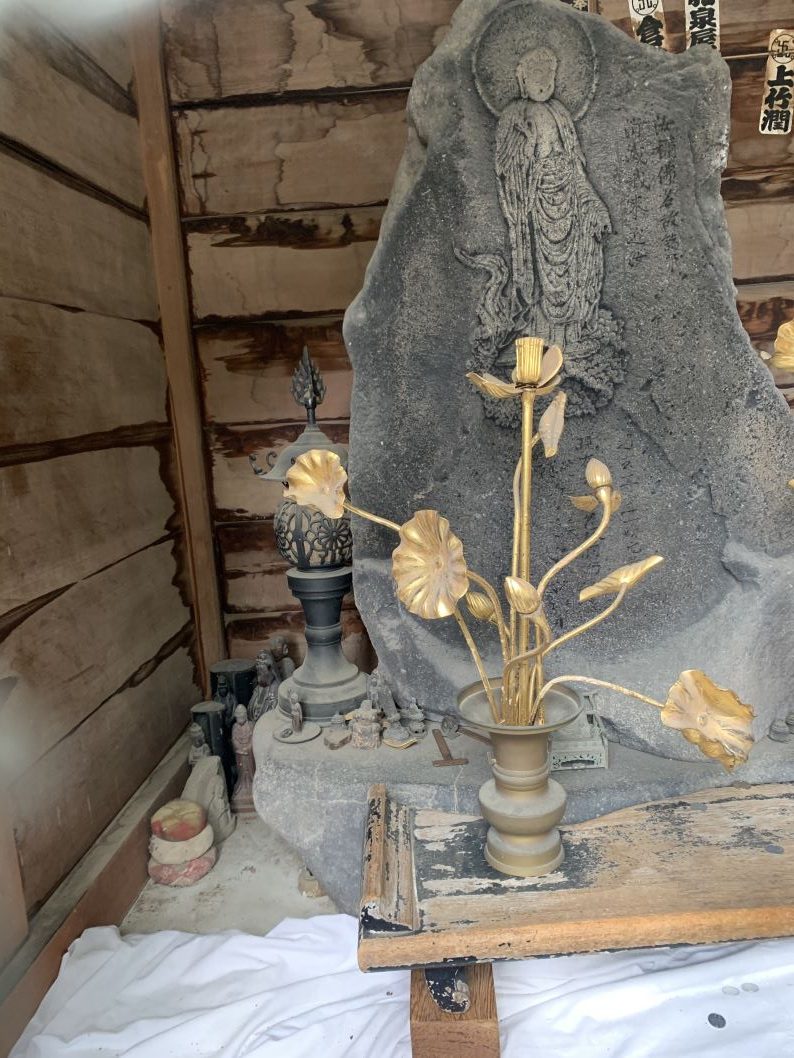
The statue is behind the locked gate of a wooden case, but you can see it if you peer through the slats.
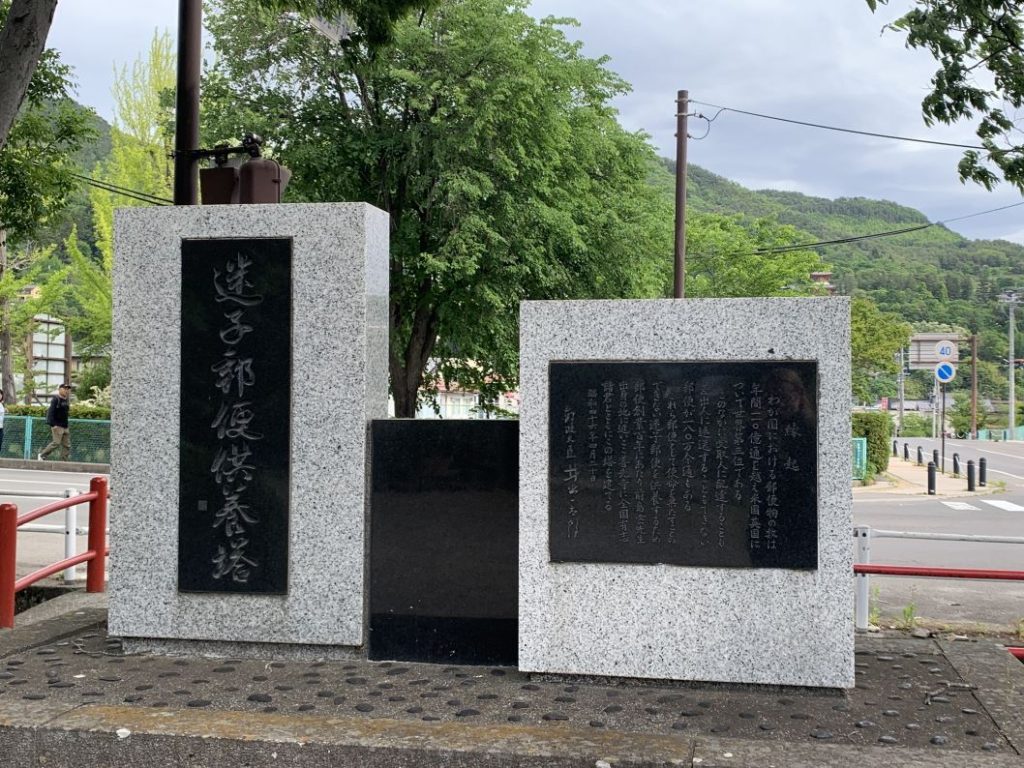
8. The Memorial to Lost Letters
Nearly two million pieces of mail go missing in Japan every year, and this memorial has been placed to help soothe their spirits.
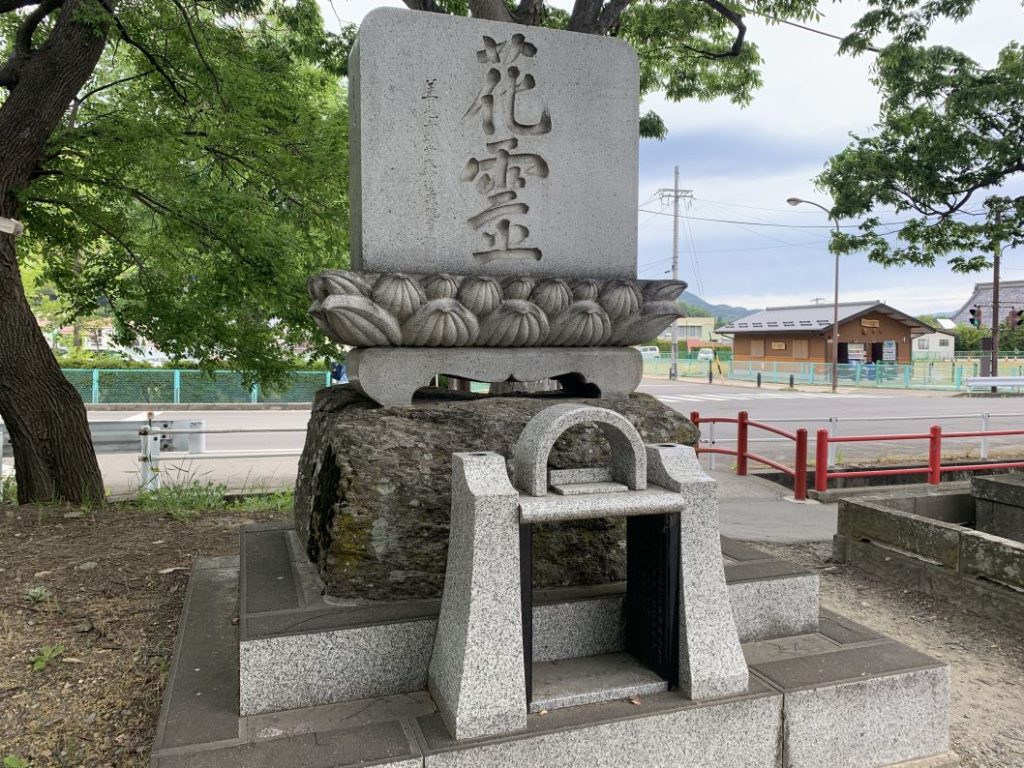
9. The Flower Arranging Memorial
Next to the lost letter memorial is this ornate stone memorial to the spirits of the flowers used in flower arranging.
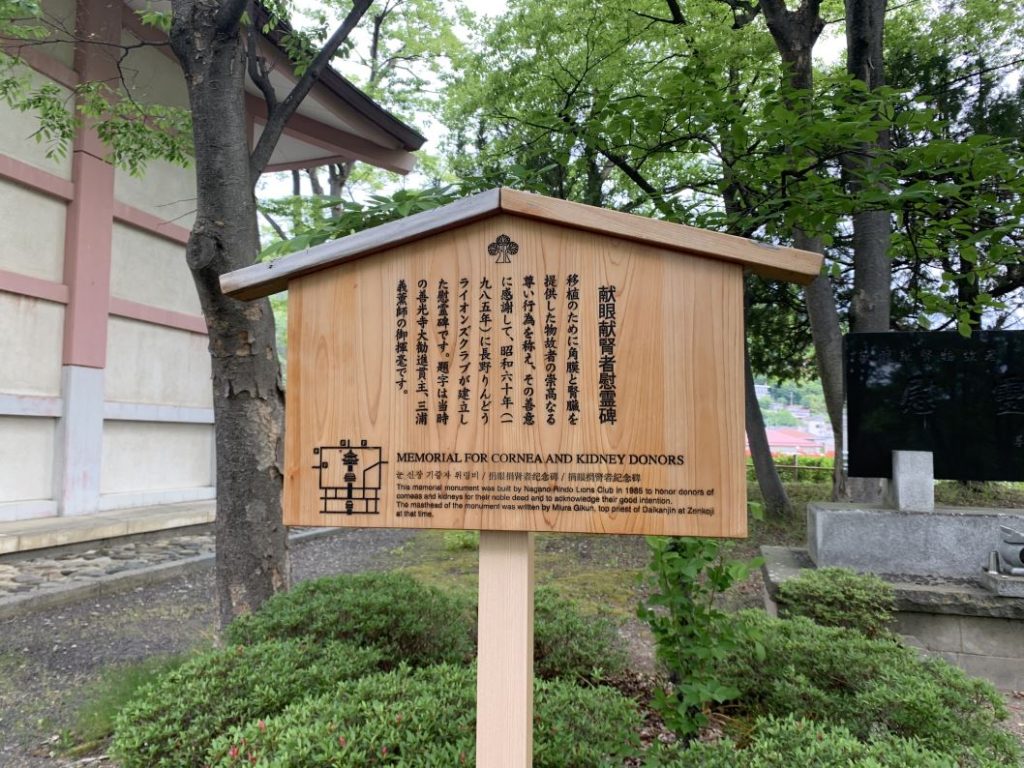
10. The Other Memorials
There are many other interesting memorials in this area. I found ones dedicated to everyone from kamikaze pilots to cornea donors. Thankfully, the signs are in English, which makes it easy to see who each memorial is honoring. Take your time and make sure you read the signs of everything you walk past.
11. The Eko Bashira
When the replica of Zenkoji’s famous statue is shown every seven years, people can’t touch it directly.
Instead, a string is tied to the statue’s finger, and the other end is tied to a 10-metre-high wooden pillar in front of the shrine. People can then touch this and receive merit for visiting the statue’s likeness.
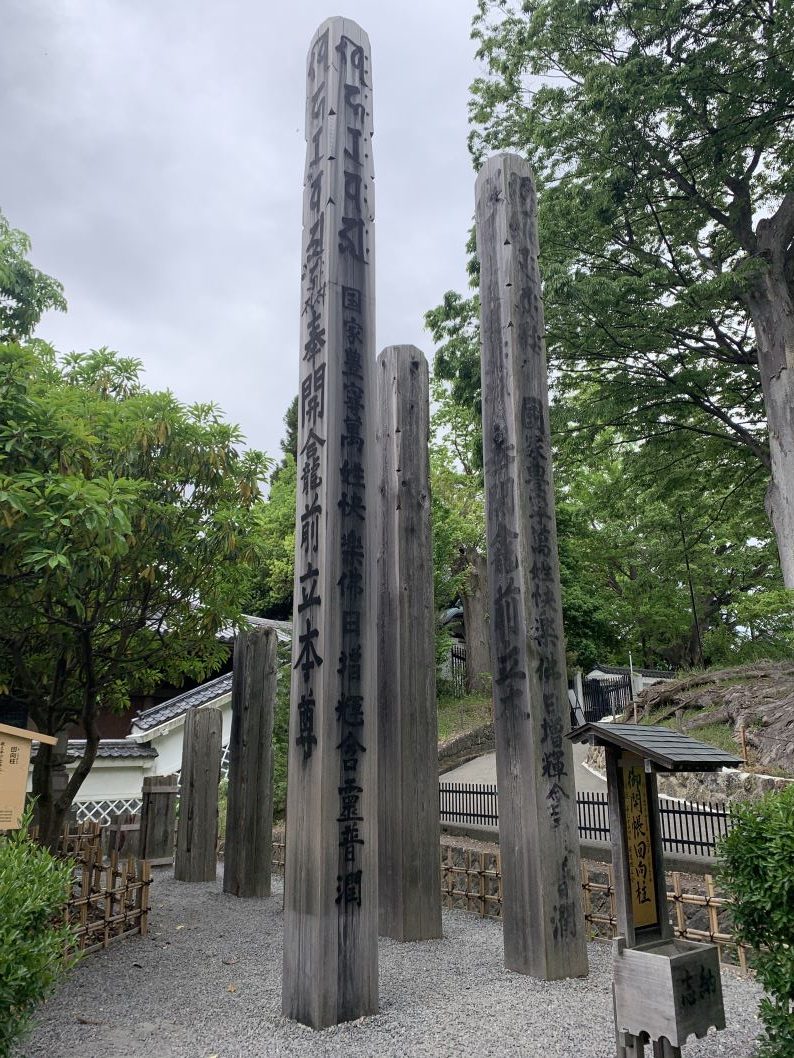
Once the event is over these pillars are moved outside to the grounds where people can visit them. The oldest of them was placed in 1955
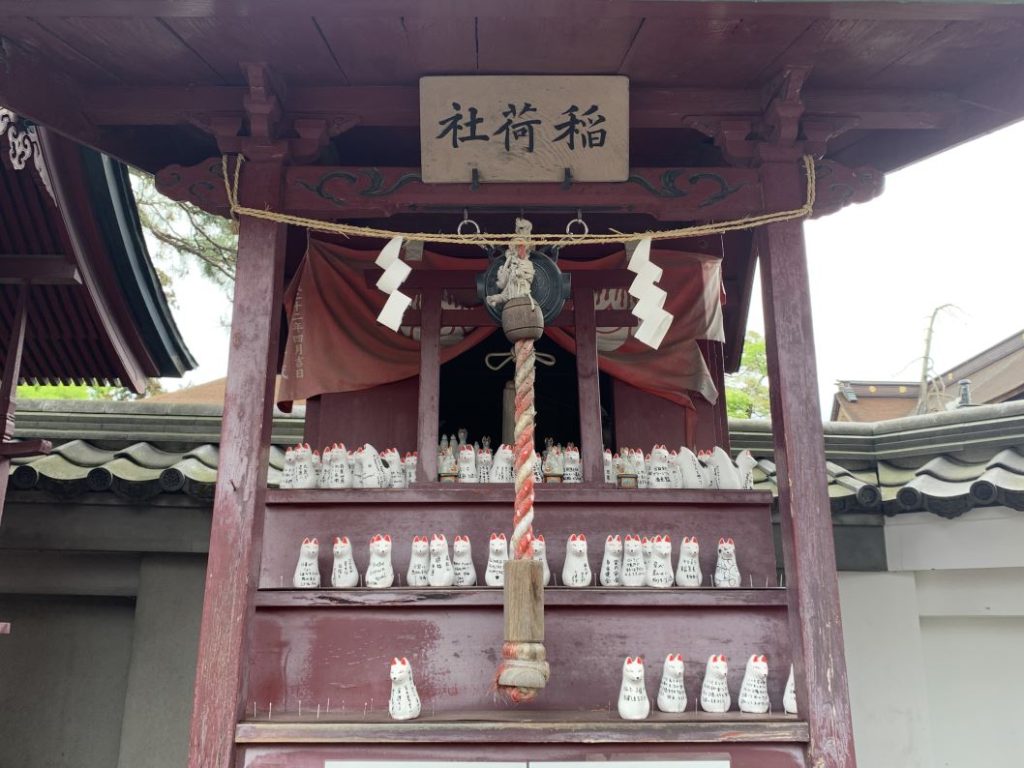
12. The Wishing Foxes
Buy a fox from the nearby shrine shop and write your wishes on his belly. Leave the fox at this area of the shrine and it’s said that your wishes will come true.
In Nearby Temples and Shrines
Zenkoji is the main temple in this area, but there are 39 sub-temples surrounding it. Some of these offer lodgings, some offer classes like calligraphy, and some hide fun little touches like these.
13. The Anxiety Jizo
This cute little fella, the Hitogiri Jizo, is found on the grounds of the Daihongan Zenkoji Temple, just south of the impressive Niomon Gate, which guards the entrance to Zenkoki itself.

It’s said that visiting him will help calm stress. You can buy small versions of him in the shrine to keep in your pocket or bag. Apparently, if you hold him in your left hand while you’re feeling anxious, he will calm and soothe you.
14. Healing Statues
Binzuru in the main hall is not the only statue with potential healing powers around here. You can also visit one in Daihongan Zenkoji or visit the venerable Bintou Lu (below), at the Daikanjin Temple in the Zenkoji grounds.

15. The Racoon Lantern
Watch if you’re at Zenkoji at night – as you might find the local racoon dogs praying at one of the lanterns.
The story goes that a racoon dog (also known as a tanuki) was upset that he had to eat other animals as part of this diet. To try and appease his worries, he changed himself into a man and joined a group of visitors at Zenkoji. He decided he wanted to dedicate a lantern to try and make up for his past chomping.
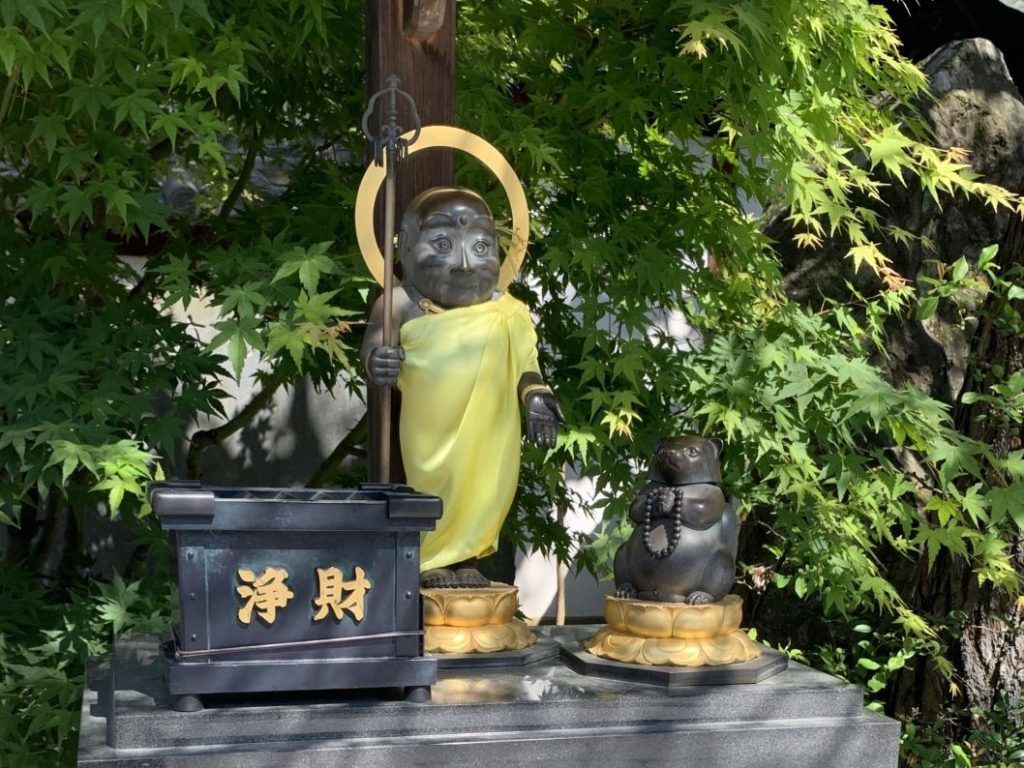
Later that day, he bathed at his lodging and turned back into a racoon dog – and was caught by the priest. He escaped, but the priest discovered his story and dedicated a lantern for him anyway.
The lantern is called the Mujina Lantern, and it’s located on the west side of the main hall. It’s said that at night, if the lantern is lit, the local tanuki appear and pray to it.
I totally missed the lantern, but I did find these two sculptures of the main players in this tale on the main street.
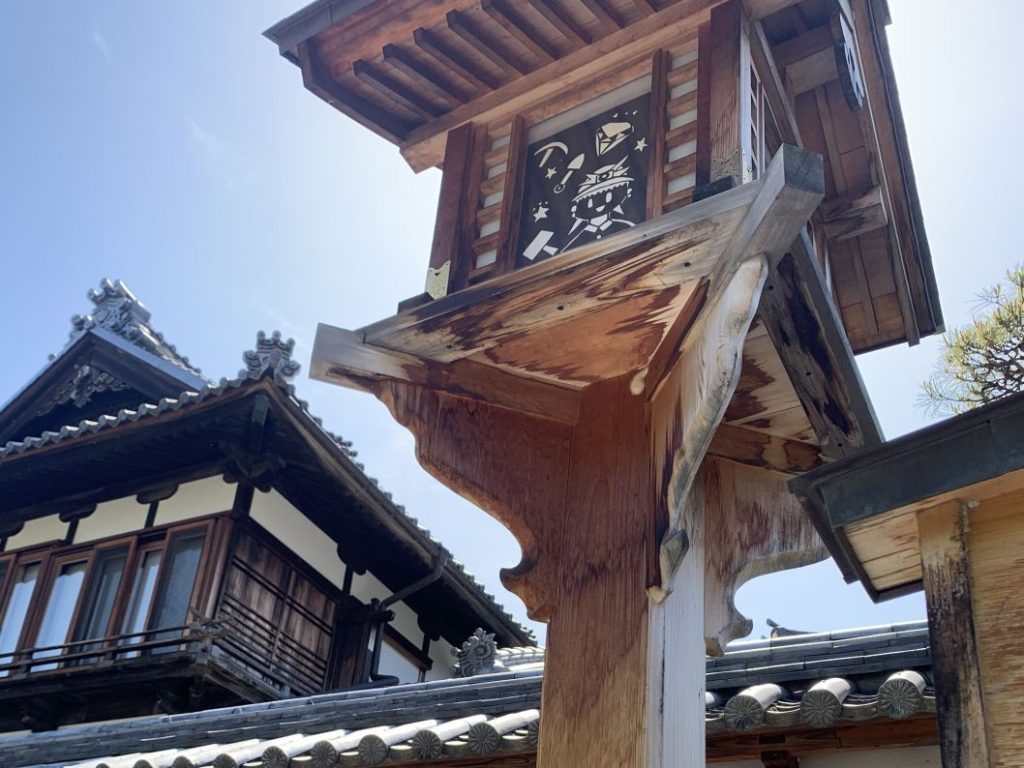
16. The Wooden Lanterns
Talking of lanterns. Each of the 48 wooden lanterns that line the road outside the temple is being restored to contain a different prayer. Together, they make up the 48 prayers of the Amida Buddha.
17. And Then There’s This!
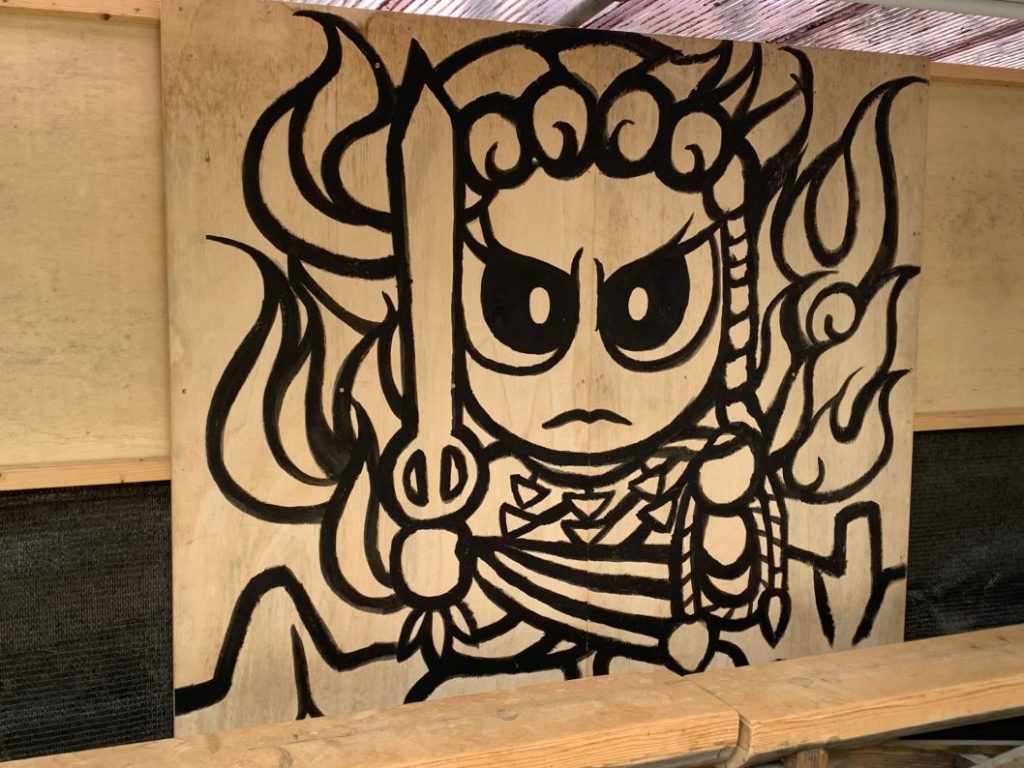
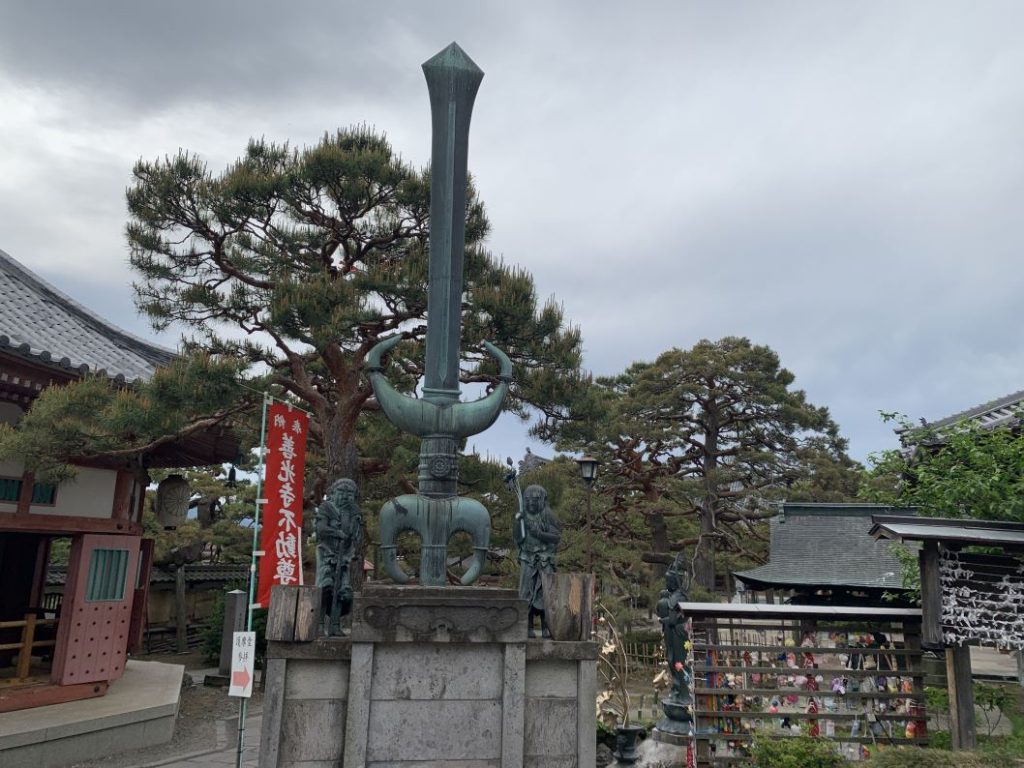
I have no idea what this picture or the statue is about.
I have no explanation; it’s just there – marvel at it!
So, there you have it; 16 fun and unusual things to see around Zenko-ji Temple. Most of them are marked on Google Maps, but, it’s best to just wander and see what you find – as I say, I’m pretty sure I missed a few more quirky sights.