Sometimes when you’re travelling around South East Asia, you can come down with a dose of temple fatigue – but that certainly won’t happen when visiting these quirky temples in and around Bangkok! There are elephants, dragons, crocodiles – and even characters from Harry Potter!
Wat Pariwat – the Cartoon Temple
If you came here from my post on Unusual Things to do in Bangkok, you’ll know that IMHO this is Bangkok’s most unusual temple – and it’s probably one of the Top 3 quirkiest shrines and temples that I’ve been to in the world.
At first, you’ll wonder what all the fuss is about. From a distance, it just looks like a normal Bangkok temple, all carvings, gold leaf and pointy roofs – but, get closer, and you’ll realise that the statues lining the edges aren’t quite what you expect.
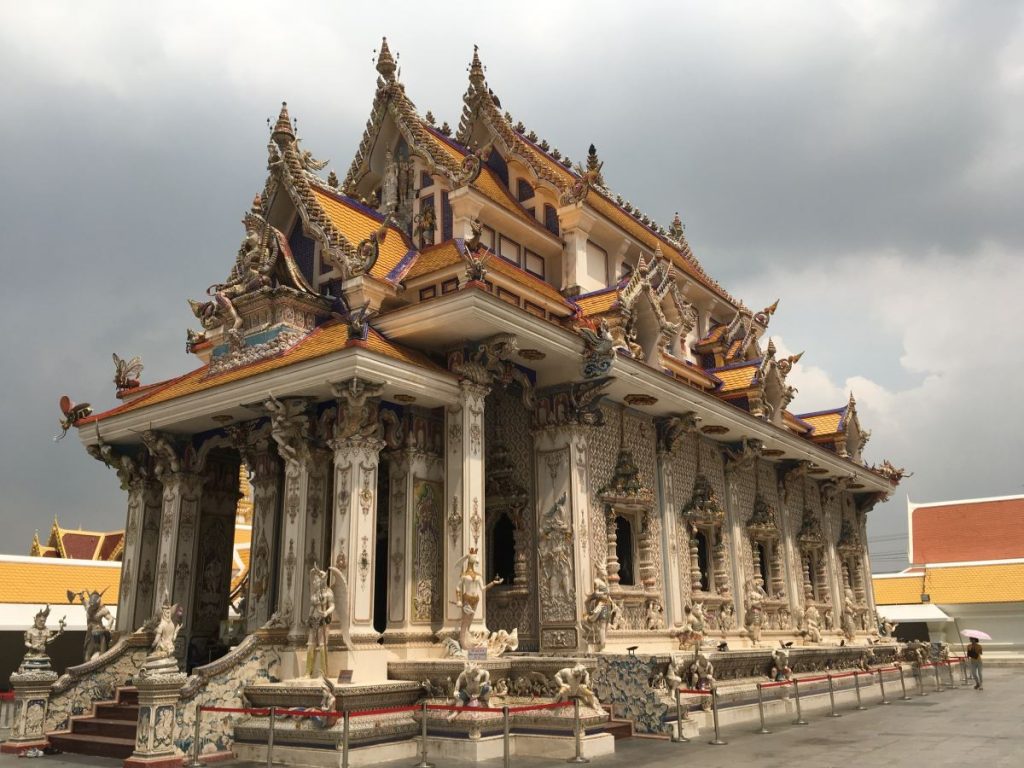
There’s what looks like a Pikachu, a few superheroes, some monks waving chainsaws, and I’m pretty sure that’s Dobby the House Elf and Fawkes the Phoenix from Harry Potter!
That’s why the temple is known as the Cartoon Temple, or, also David Beckham Temple, as one altar has a carving of the footballer.
You can spend hours here walking around spotting all the tiny details, and if you really want your mind blown, every single detail here was carved by hand – they were adding petals to the flowers on a second structure when I was there.

How to Get to Wat Pariwat
Take the BRT – Bus Rapid Transit – from Sathorn Station. You need to get off at Wat Pariwas. It looks complicated, but it’s actually very easy, and you can pay with your Rabbit Card.
It’s open seven days a week from 8 am to 6 pm, seven days a week. Entrance is free.
If you want to see more pictures of Wat Pariwat, or, to get more detailed directions on how you get there, check out my longer post on Wat Pariwat.
Wat Yannawa – aka Boat Temple
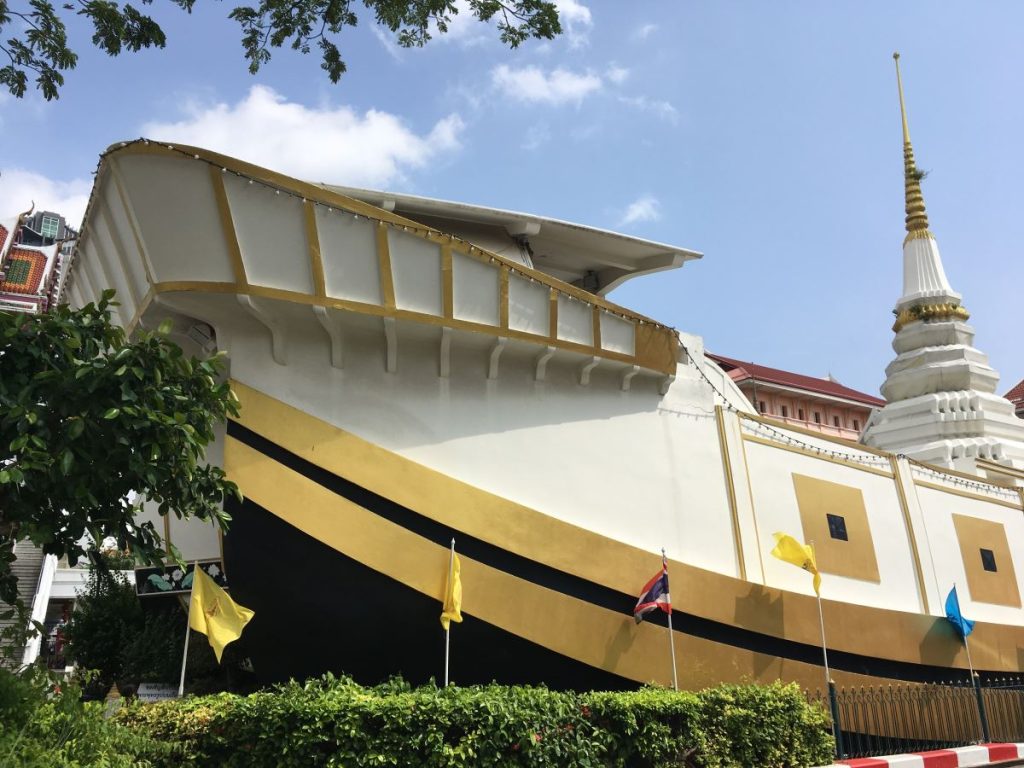
Built in the 19th century, Wat Yannawa, as it’s officially known, is one of Bangkok’s oldest temples – and, yes, it’s shaped like a boat!
Apparently, King Rama III, who ruled Thailand when the temple was built, ordered it to be boat-shaped in honour of the foreign ships that helped Bangkok prosper.
I love the juxtaposition between it and the skyscrapers behind it – it’s also a fantastic spot to get a picture of Bangkok’s famous abandoned Ghost Tower.
How to Get to Wat Yannawa
Wat Yannawa is located at 40 Charoen Krung Road, just a short walk from Saphan Taksin BTS, so you can quickly nip there before getting a boat up the river to places like Khao San Road.
Or hang around and explore the nearby area of Bangrak. This is packed with street food and restaurants and home to some of the spots in our guide to Cheap Eats in Bangkok.
The temple is open from 7 am to 6 pm seven days a week. Entrance is free.
Erawan Museum – Elephant Blessings
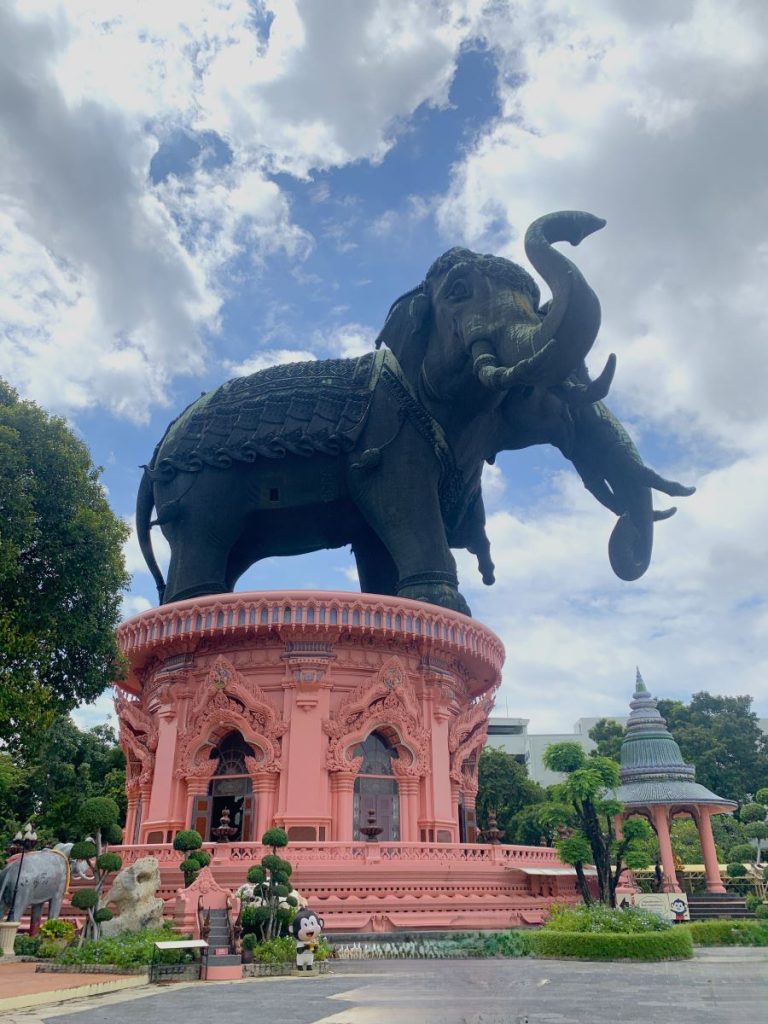
Okay, so this isn’t officially a religious shrine, but it is a museum with highly religious themes, and as, you walk around it, you can carry out a pilgrimage at 10 different spots that allows you to make merit, which is a common Buddhist practise that aims to curry favour with the gods.
It’s also believed that walking under the bellies of the parade of elephant statues that line the pathway of the museum is lucky for pregnant women – and so, I’m going to include it in here.
Plus, it looks fantastic!
My longer guide to the Erawan Museum (coming soon) explains what’s in the museum and how to carry out the pilgrimage.
How to Get to Erawan Museum
It’s a bit out of the city. First, take the BTS Sukhumvit Lane southwest to Chang Erawan. From here, it’s a 14-minute walk to the shrine, or you could flag down one of the songtheaw ‘buses’ that head down the main road.
We did this, and the ‘bus’ was moving faster than Google Maps, so we missed the stop, but don’t panic. If you see the elephant on the right, push the buzzer; even if you go past it, you can just walk up the road and cross.
I bought a combined ticket to Erawan Museum and the Ancient City, which is also down this way, in advance from Klook. This works out a bit cheaper than buying them separately. The process of swapping the online voucher for tickets was very fast.
If you are paying on the door, it costs 500 baht for adults and 250 baht for children. The museum is open seven days a week from 9 am to 6 pm.
Wat Chakrawat – aka Crocodile Temple
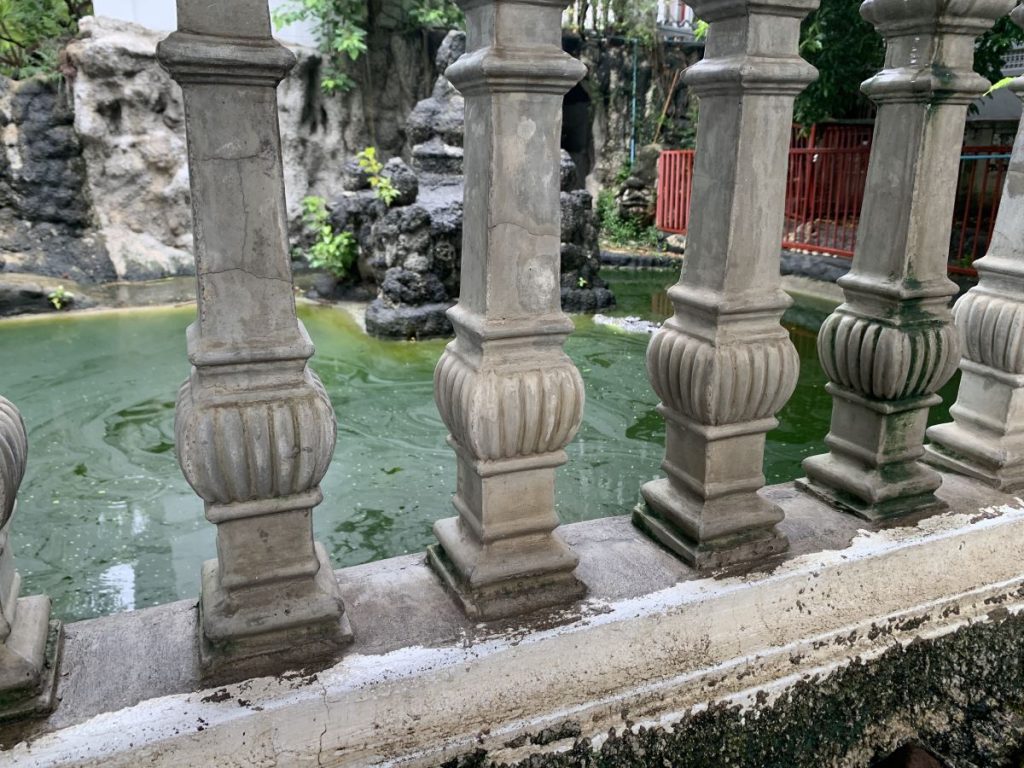
Easily combined with a trip to the street art spot of On Ang Walking Street, Wat Chakrawat has a small (smelly) pool of crocodiles along one side of it.
The legend is that they are all ancestors of a fearsome man-eating crocodile (with one eye!) called Ai-Bod, who used to live in the Chao Praya river. When the locals came to hunt him down, he hid in the temple where the monks built him a home.
It’s interesting, but I’m not sure they’re the happiest reptiles on the planet, so do bear that in mind when you visit.
How to Get to Wat Chakrawat
The full name of the temple on Google Maps is Wat Chakrawatrachawat Woramahawihan – do not confuse it with a small shrine elsewhere in Thailand.
To get here, you can catch a boat to Rachawong pier and walk north, or catch the Metro to Sam Yot and walk down the canal to reach the temple.
It is open 24 hours a day, seven days a week. Entrance is free.
Wat Paknam Phasi – The Giant Buddha
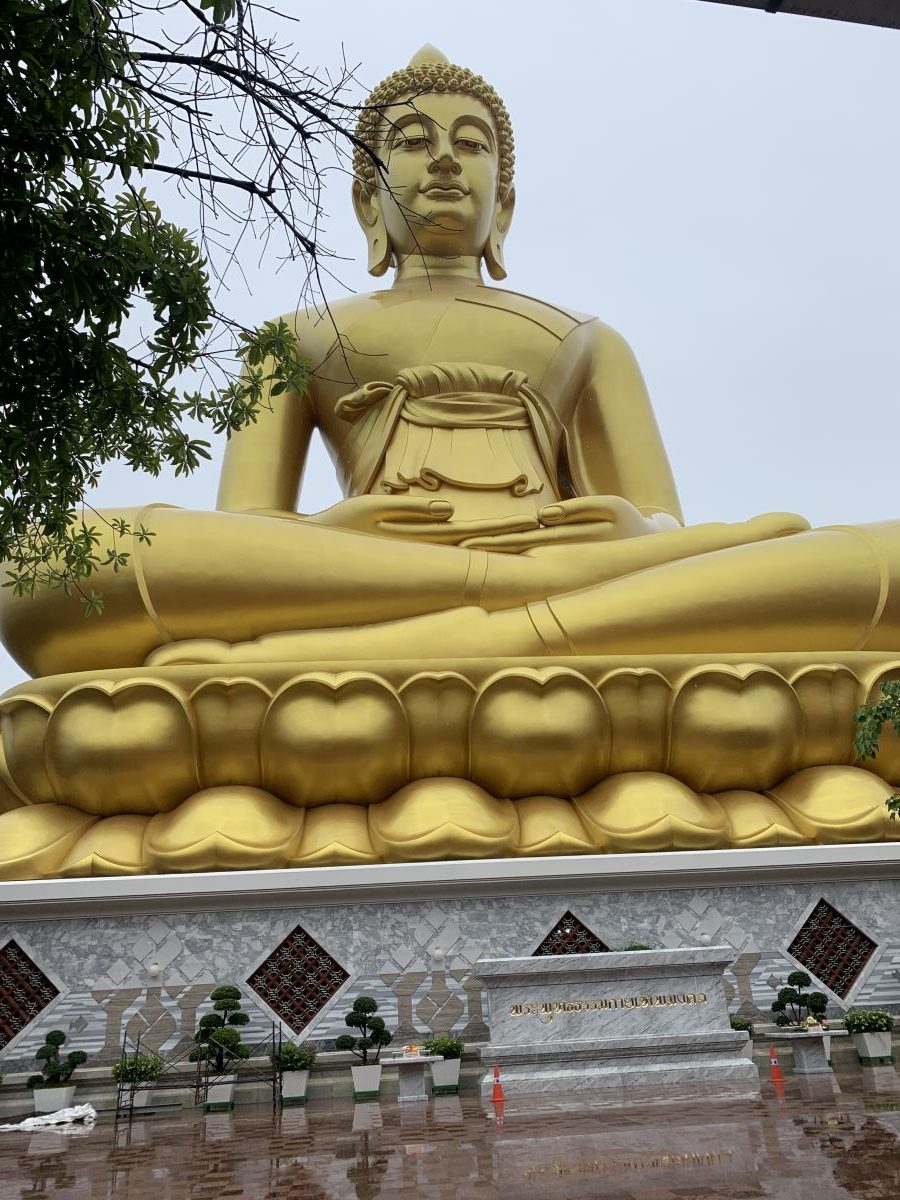
At Wat Paknam Phasi in west Bangkok, they have built the most enormous Buddha statue. At 69 metres high and 40 metres wide, it towers over the skyline and dwarves anyone standing underneath it.
And it’s not the only amazing thing at this site – there are statues to which people add gold leaf, a very odd museum and the most psychedelic ceiling I’ve seen in a long time.
How to Get To Wat Paknum Phasi
The best way to get to Wat Paknum Phasi is to take the BTS to Wutthakat, from where it’s a 17-minute walk, or head onto the main road and flag down a cab.
Have a picture of the Buddha ready on your phone, as it took a while for them to work out where I wanted to go when I asked.
For more details on what you’ll find at the temple, and a detailed guide on how to get there and make it fit into your Bangkok itinerary, check out our larger post on the Bangkok’s big Buddha
Wat Paknum Phasi is open from 6 am to 8 pm, seven days a week. Entrance is free.
San Chao Xin Pun Tao Kong – The Hidden Rooftop Shrine
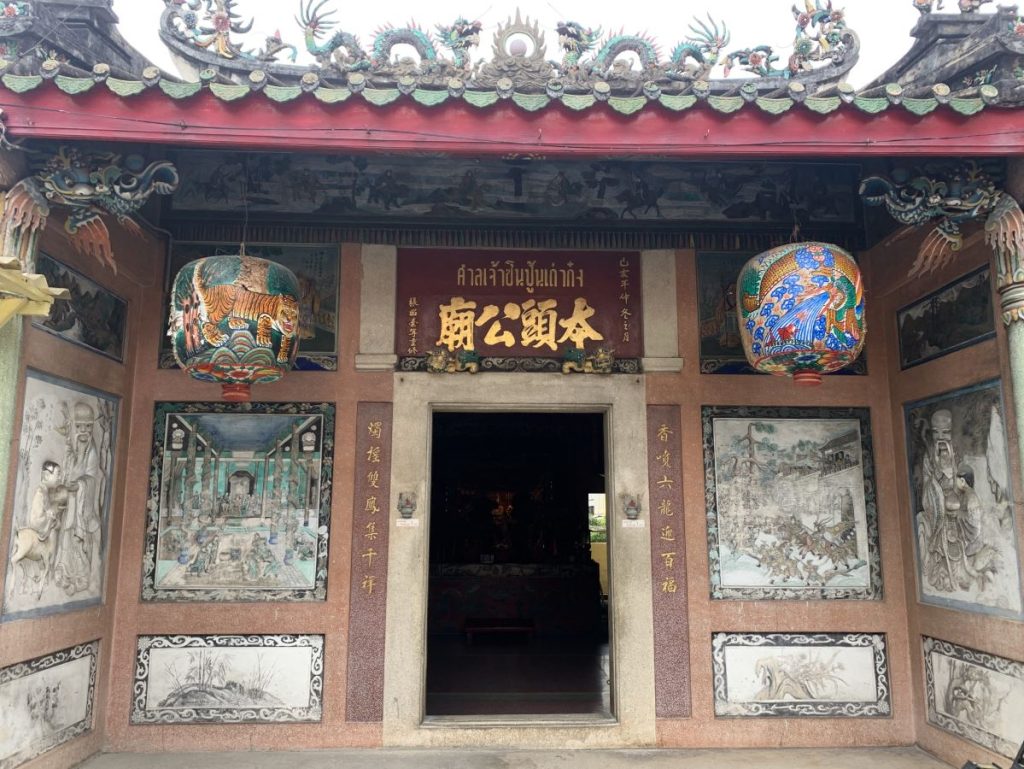
This shrine doesn’t have any quirky theming or hidden animals, but it makes its way onto the list as it’s so hidden.
It’s located right on the top of a nondescript building in the backstreets of Chinatown. Open the ornate metal gate and head up the flights of stairs, and you’ll walk past someone’s lounge and come face to face with a gorgeous set of painted doors and carved walls.
It’s very simple, but so surprising to find it tucked away.
While the Buddhist temples of Bangkok get most attention, the Chinese temples hidden in and around the city are often quite amazingly decorated.
How to Get to San Chao Xin Pun Tao Kong
There isn’t a station super near the shrine, but it’s an easy detour if you’re exploring Chinatown, or the achingly cool Song Wat area.
The closest public transport is the boats from Ratchawong pier.
According to a sign on the gate, the day I visited, it is open 9.30 am to 5 pm.
Wat Khanikaphon – the Madam’s Temple
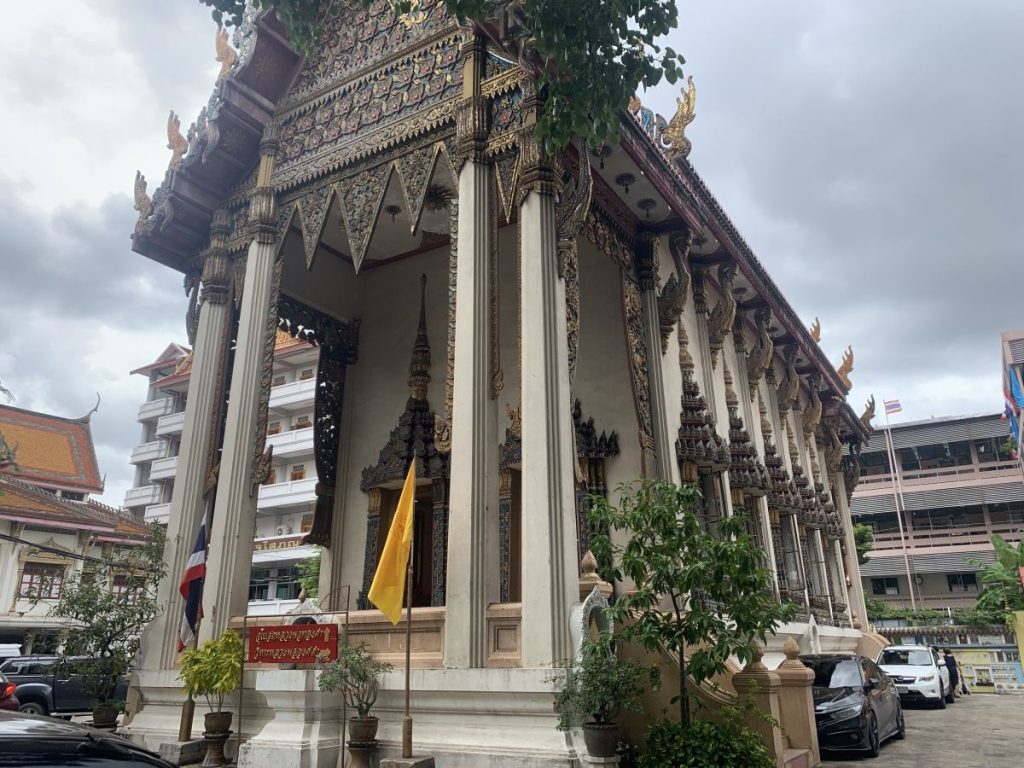
This temple isn’t interesting for its design, which is very traditional, as much as for its backstory.
It was founded by a local brothel owner, Madam Faeng, with contributions from the girls working for her.
When the temple was built, Madam Faeng asked a local monk to come and bless it, but, because of how it was funded, he told her she would only receive a small amount of merit.
Today, the temple is an important part of the community; there’s even a school on site. There is a gold statue of Madam Faeng inside.
How to Get to Wat Khanikaphon
It’s located a little north of Chinatown, so while there isn’t a lot around the temple itself to draw the average tourist, you can easily combine it with a visit here.
The closest Metro Station is Wat Mangkok, a four-minute walk away.
There are no official opening hours listed so just arrive within normal working hours. Entrance is free.
Wat Indharaviharn – the Hidden Giant Buddha
I stumbled across this while doing a walk around the backstreets north of Khao San Road, and at 32 metres high and 10 metres wide, it’s pretty huge – and it was here long before the new big Buddha.
Apparently, the statue took 60 years to build.
To give you an idea of scale, this is just his feet.
The temple is called Wat Indharaviharn, and it’s also known for its altar that is said to grant success.
This is pretty much off the tourist trail, but the area around here is fun to wander if you want to see a bit of a less-touristy area of Bangkok. If that sounds like fun, check out our mini-walking tour showing you this, and a few other of the less touristy things around Khao San Road.

How to Get to Wat Indharaviharn
As I said, it’s a bit in the middle of nowhere, but you can walk here in 20 minutes from Khao San Road. The nearest public transport, other than buses, is the Phra Athrit boat stop. It’s about a 20-minute walk from here
Open 6 am to 6 pm seven days a week. Entrance is free.
Wat Samphran – The Dragon Temple
This isn’t in Bangkok itself, but is reachable as a day trip – and it’s amazing. Look at it!
Halfway between Bangkok and Maeklong Railway Market is one of the most unique sights in Bangkok, Wat Samphran – aka the dragon temple.
Built in 1985, it’s a mix of Chinese and Thai designs, and you can actually walk inside the dragon that wraps around the tower. It’s said that doing so will cleanse you of sin!
The tower the dragon sits upon is 80 metres high.

How to Get to Wat Samphran
It’s not that easy to get there under your own steam from Bangkok, but because it’s become a little bit Instafamous, you can now book tours to visit it. This one goes to a riverside market, the temple, and a pretty local cafe.
The other option would be to go by Grab. This is cheaper than a tour, but you might not find it quite as easy to, erm, grab one on the way back. You can also try negotiating with a local taxi or asking your hotel to do so, so they drop you off and wait while you explore.
Google states that the temple is open 7 am to 6 pm, but the inside may not open until 8 am or 9 am. There is no entrance fee, but you will be asked for a donation if you go inside.
Dressing to Visit Temples and Shrines in Thailand
Remember, if you are visiting temples or shrines in Bangkok, there is an expected dress code. Make sure your knees and shoulders are covered, or you may not be allowed in. This includes men wearing shorts.
If the rule is strictly enforced, there will usually be sarongs on site that you can borrow or hire to cover up when inside the shrine.
You may also need to remove shoes in some areas, so make sure you are wearing socks – and shoes you can get on and off fairly easily.

Who Writes Differentville?
My name is Helen Foster and I’m a journalist and author living in Sydney.
My travel articles have been published in titles including The Australian, Body & Soul at the Sunday Telegraph, RAC Horizons, Jetstar magazine and more.
I like the weird, the wonderful and anything that makes me jump and down with glee like I’m about three. That’s what you’ll find here.