You might have seen it on social media – a shrine in Tokyo where people leave offerings shaped like the famous rice ball snack. But where is it – and, more importantly, why is it there?
Posts on this site may contain affiliate links, and I get a small commission if you purchase from these. As an Amazon Associate, I earn from qualifying purchases.
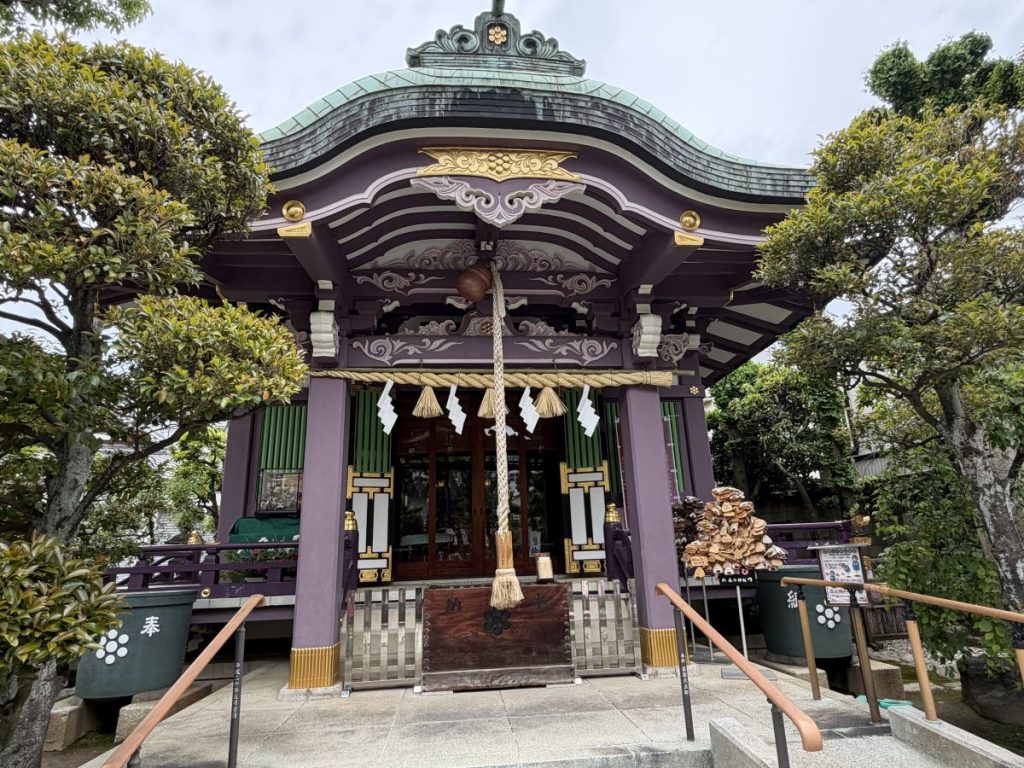
The real name of the onigiri shrine in Tokyo is Takagi Shrine, and it’s located not too far away from Tokyo Skytree. The deity worshipped at this shrine is Takami Musubi, one of the three original gods in Japanese mythology.
Takami Musubi is a god who offers blessings for ‘the creation of all things,’ ‘the fulfilment of wishes,’ and ‘the resolution of negotiations and consultations.’ He’s also deemed to bless relationships, and many people come here to pray for luck in love.
The shrine was originally built in 1468, but the building you see today was rebuilt in 1967. It’s unusual among shrines as it is purple.
All of which has nothing to do with the elephant in the room – why is the shrine also full of all things onigiri-shaped?
Why People Leave Onigiri at Takagi Shrine
It’s basically a play on words.
The other name for onigiri in Japan is omusubi – do you see it? oMUSUBI – just like the name of the god worshipped at the shrine. So, at some point someone decided that the shrine should henceforth be linked to the tasty rice balls.
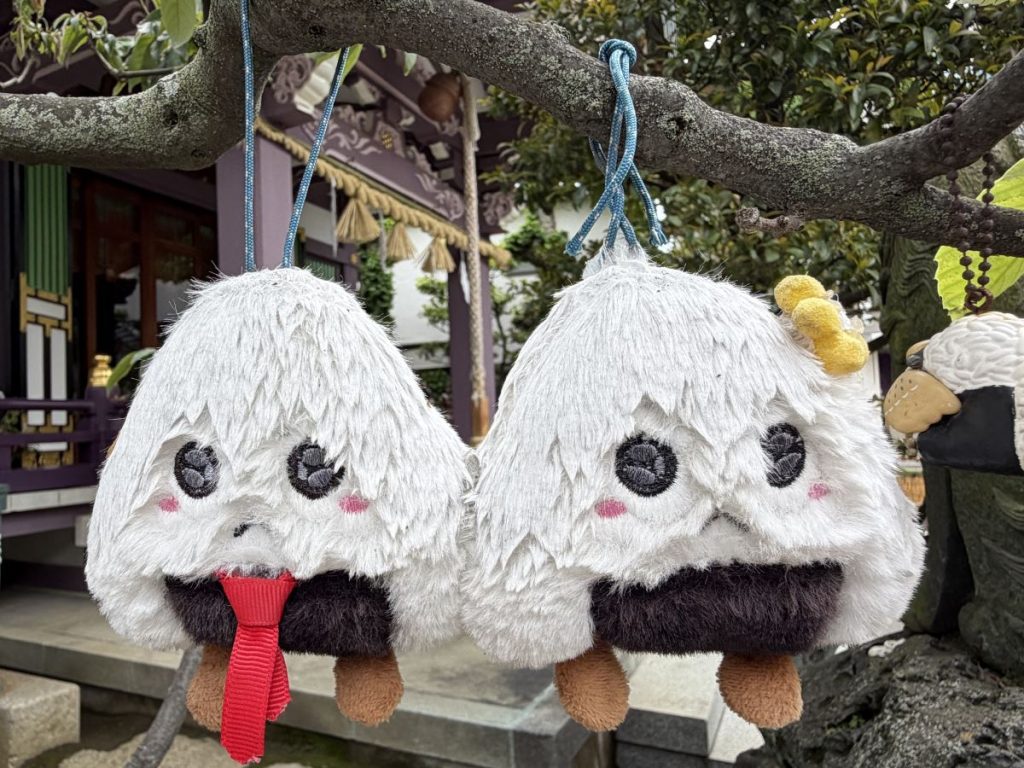
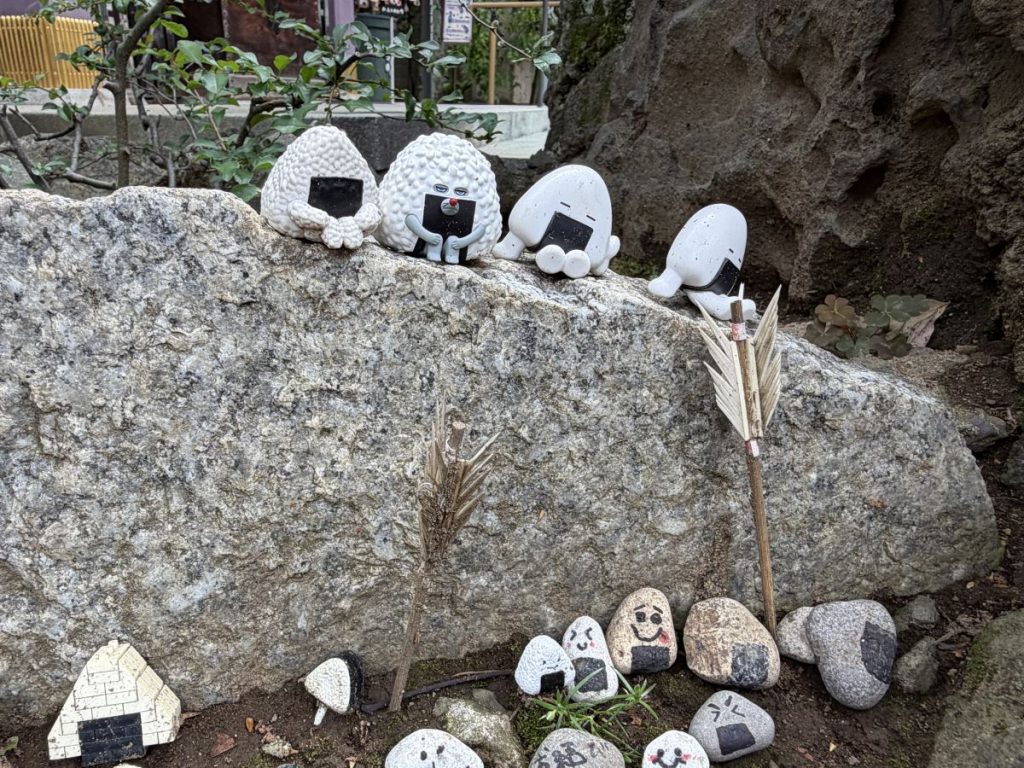
Now people come here offering all sorts of rice ball-shaped offerings – including small stones, crocheted rice balls with cute little faces, giant fluffy ones. I’ve been twice and amazed at the different variations of onigiri-shaped things people can find to leave.
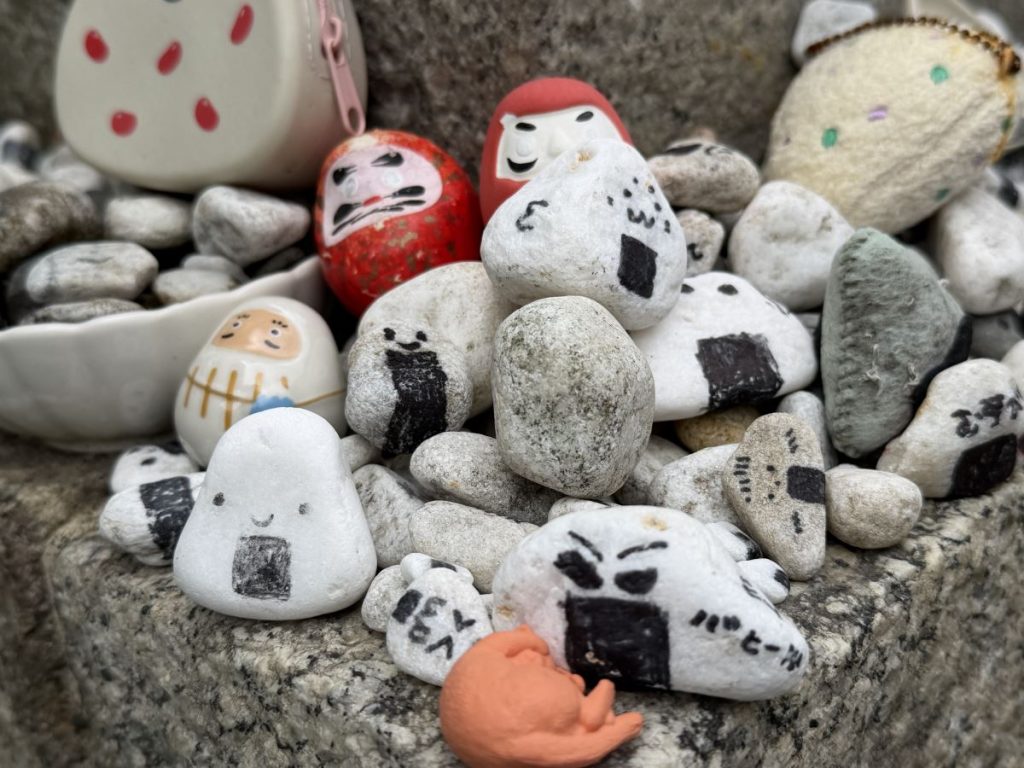
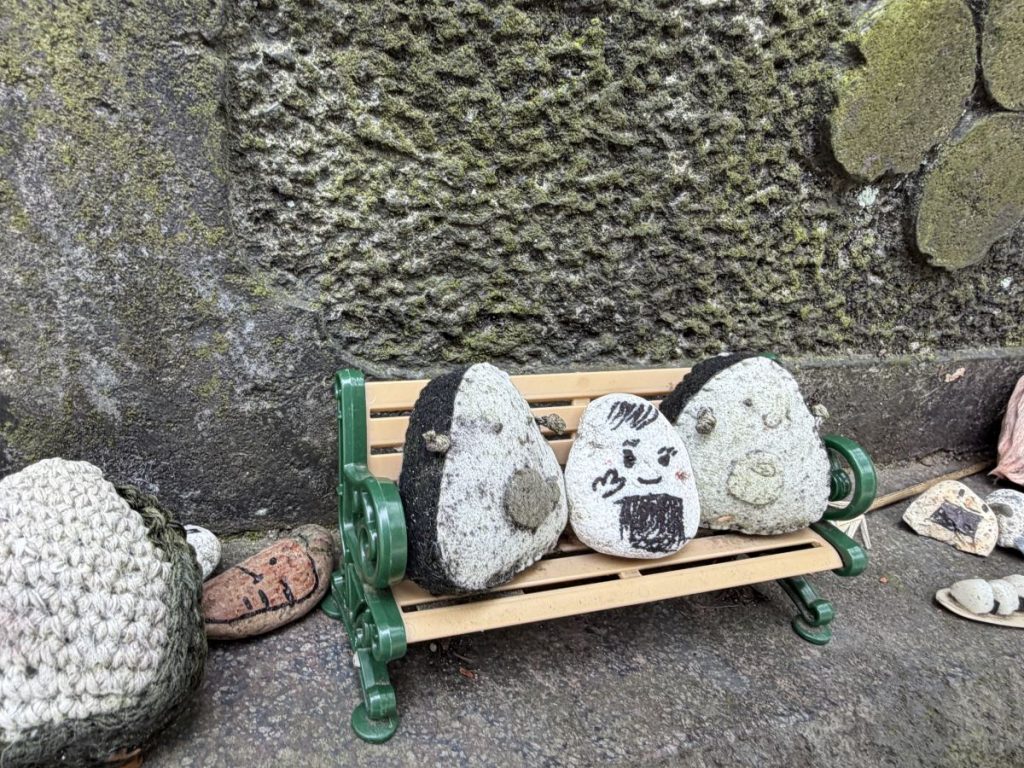
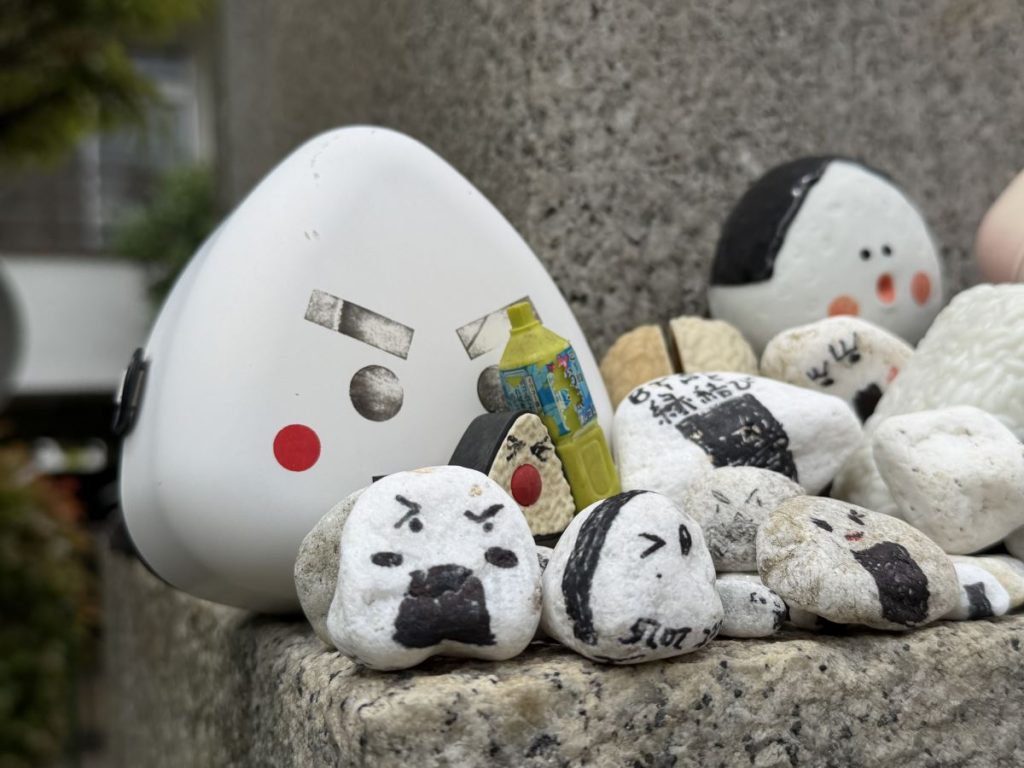
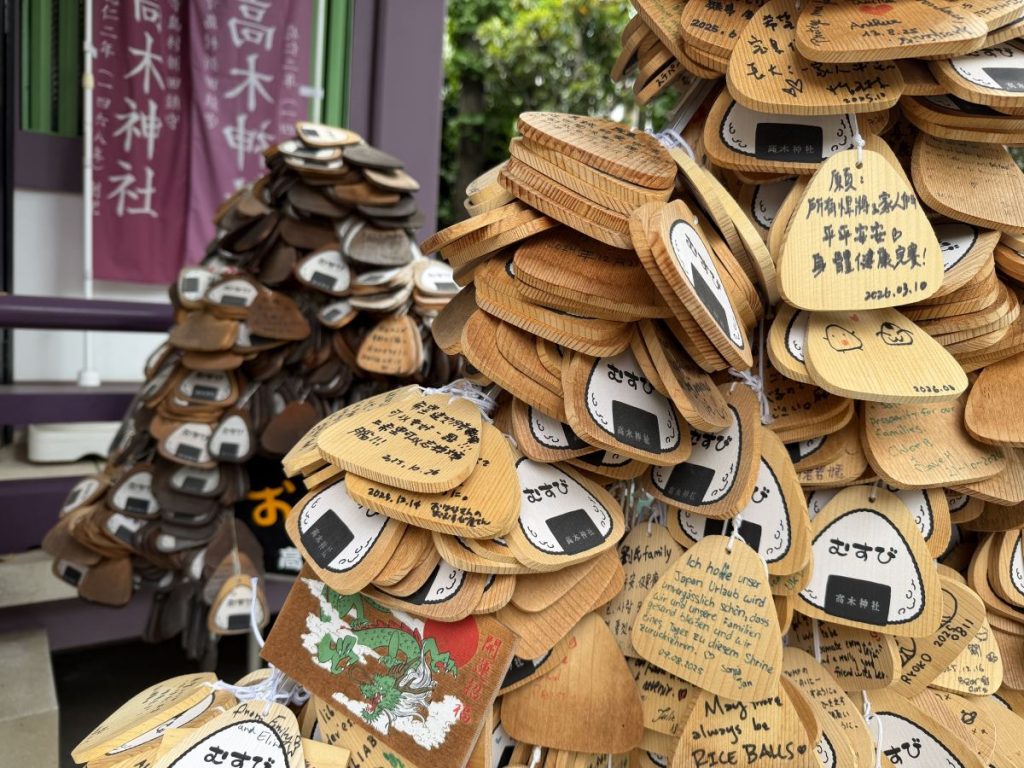
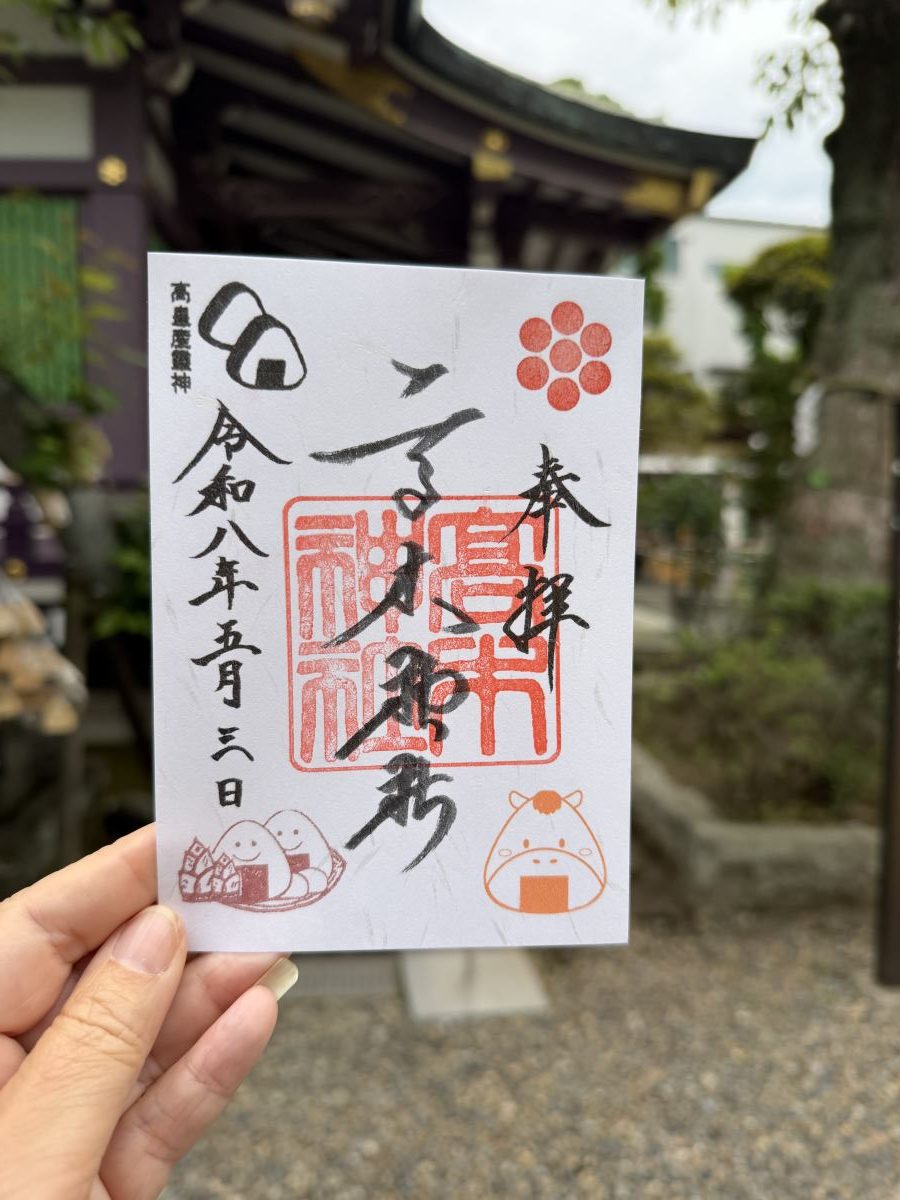
The shrine also embraces the rice ball theme in its own offerings. The prayer plaques come in an onigiri shape; they sell riceball-shaped amulets – and even the goshuin contains one.
It’s all very cute and definitely worth visiting if you are in the area of Tokyo Skytree.
Other Interesting Things at Takagi Shrine
While the onigiri may have brought the shrine to people’s attention, there are a couple of other interesting things to spot around the shrine.
The Lion Dogs
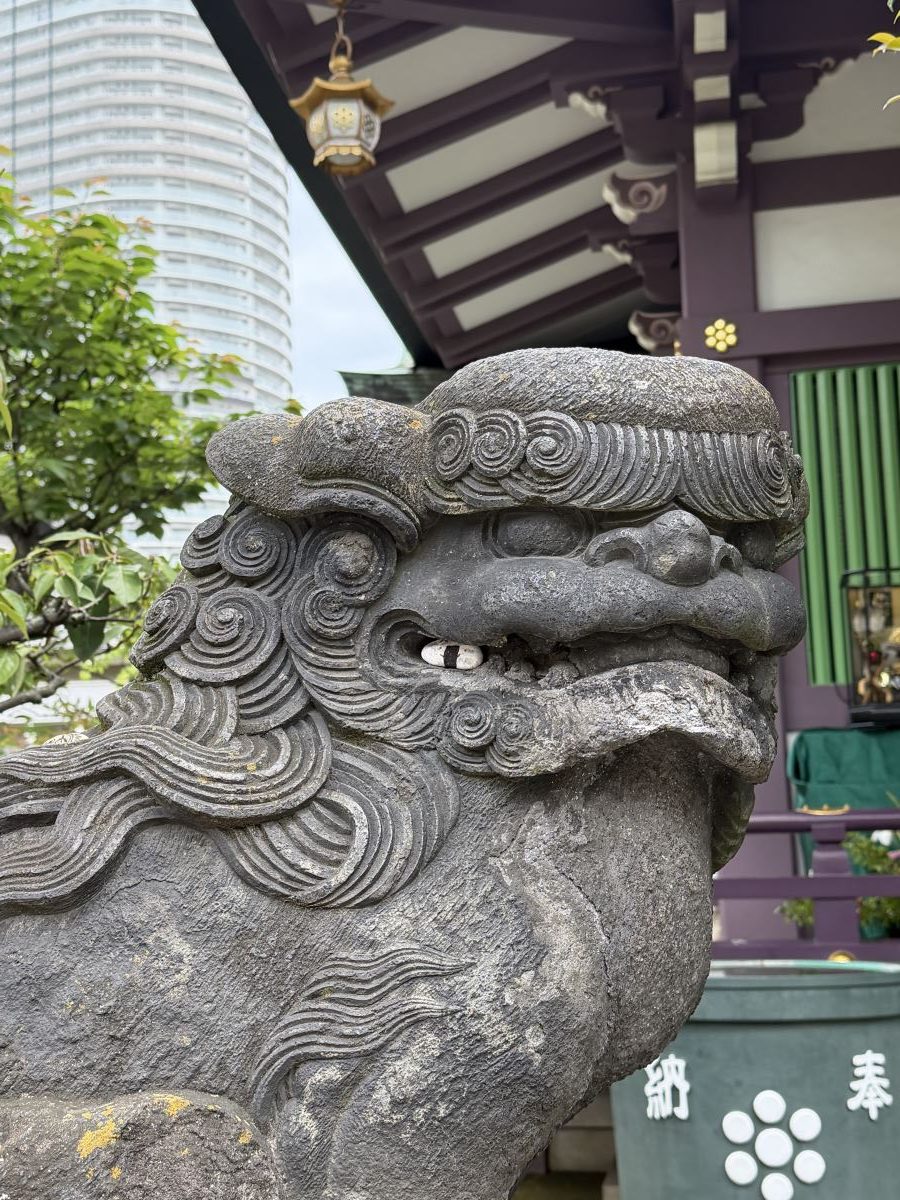
The Lion dogs that guard the entrance to the shrine are unusual, as they both have the same mouth position – usually one is open, one is closed. Here they are both closed.
The Wishing Tree
The giant camphor tree in the middle of the shrine is said to grant wishes if you touch the trunk and then ask for your wish.
The Arrows
You’ll also notice arrows around the shrine.
Arrows are generally linked to protection and left as offerings at many Shinto shrines, but here there is also an extra element of relevance.
There is a legend that one day Takimi-Musubi is sitting up in the clouds when an arrow lands at his feet. He realises this arrow has killed a pheasant sent to earth by the gods – and, angered, he sends the fatal arrow back to Earth, where it kills Ame-No-Wakahiko, another god – and the one who shot the pheasant, and arrow, in the first place.
The Dragon Head
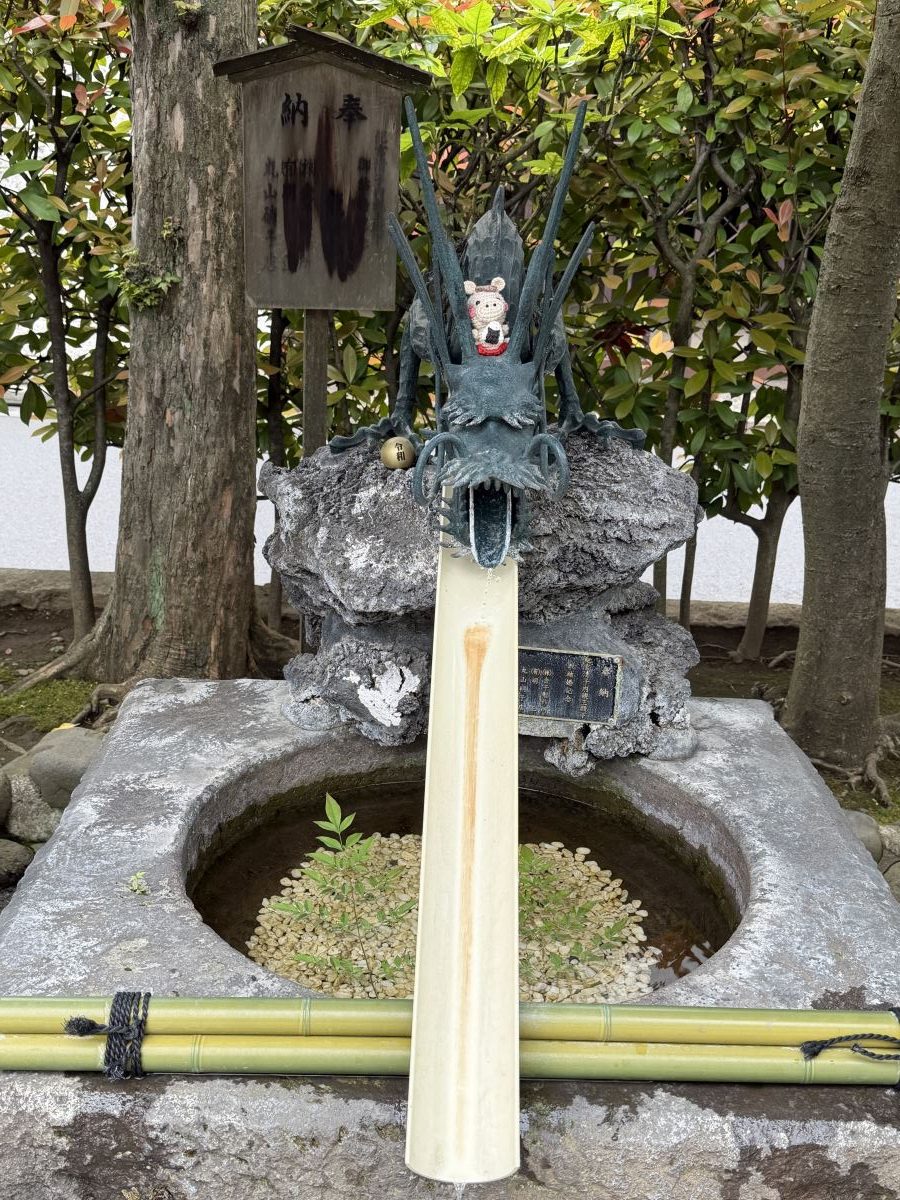
The dragon detail presiding over the handwashing font was donated by local worshippers to commemorate the marriage of Her Imperial Highness Princess Sayako in 2005.
This wedding was notable as she married a commoner (a Tokyo Government employee and friend of her brother) and relinquished her royal status upon marriage. She still lives in Tokyo, but is also now the high priestess of Ise Shrine in Mie Prefecture.
Anime Characters
The shrine is also popular with fans of the anime Karakai Jouzu no Takagi-san.
While this was primarily set on the island of Shodoshima, the director, the actress who voiced the main character and the singer of the theme tune all visited Takagi Shrine to wish for the anime’s success. You’ll also find prayer plaques and other things around the shrine containing drawings of the main character.
Skytree Photo
There’s a cool photo of the top of the shrine and Tokyo Skytree together if you know where to look. Guess who didn’t! The big clue is the set of green footprints on the ground. Stand there and look up!
How to Get to the Onigiri Shrine
The closest station is Oshiage (Skytree), which is on the Asakusa, Hanzomon, Tobu Skytree, Oshiage and Keisei Narita Lines.
The best exit is A3.
From there it’s about a seven-minute walk to the shrine.
What Else is Nearby
The obvious big sight is Tokyo Skytree, which is an eight-minute walk away.
Just outside Skytree is the branch of Kura Sushi holding the largest sushi train in the world.
I got very excited when I first heard this and was expecting to see plates of salmon snaking around the building, but you’re actually served in individual booths so you don’t see the whole conveyor – it’s still a good place to grab lunch though, especially if all the onigiri has put you in the mood for rice!
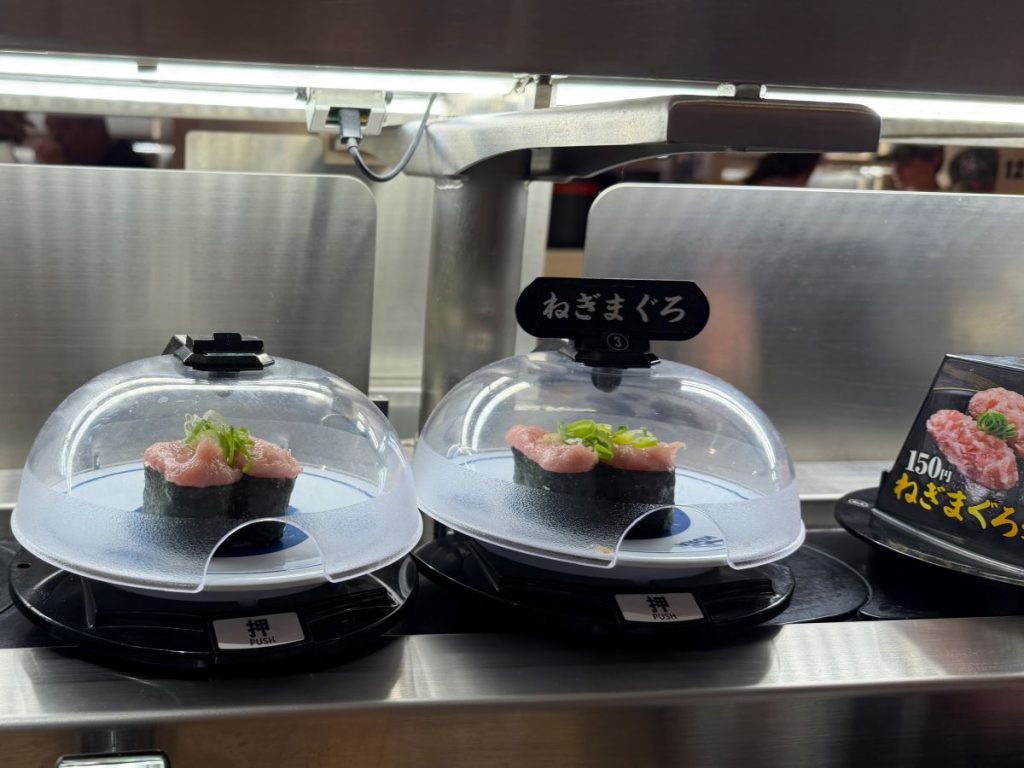
A note to solo travellers – even if the wait listed on the machine seems huge, grab a ticket. There’s usually space at the single-seat counters, and you will be served far quicker than the wait time suggests.
If you’re collecting goshuin, the pretty stamps you can buy at Japanese shrines and temples, you might also want to visit nearby Tobiki Inari, which has cute fox-related stamps.
After my visit, I walked about 10-minutes around the corner to visit a place called the Museum of Roadside Art. Despite the name, do not expect neon road signs; instead, it’s an erotic art museum, which gives you a clue that it might not be for the easily shocked, but some of the displays are quite eye-opening.
The piece-de-resistance is the bar on the top floor, which is populated not just by humans, but, erm, dolls – and I’m just going to leave it at that, as this post started off talking about a shrine – and I’m not really sure if it’s appropriate to give more details. But, if you want a very ‘only in Japan’ experience, you might want to look it up. The staff were absolutely lovely to us when we visited.

Who Writes Differentville?
My name is Helen Foster and I’m a journalist and author living in Sydney.
My travel articles have been published in titles including The Australian, Body & Soul at the Sunday Telegraph, RAC Horizons, Jetstar magazine and more.
I like the weird, the wonderful and anything that makes me jump and down with glee like I’m about three. That’s what you’ll find here.